Skip to content
Home page - Centenary Institute Centenary Institute

Primary menu

  • Research
        • Research

          The latest medical research into our most complex health challenges across biomedical AI, cancer, cardiovascular diseases, immunity, age-related, rare and infectious diseases.

          Learn more

        • Biomedical AI
        • Cancer Innovations
        • Cardiovascular Research
        • Healthy Ageing
        • Infection & Immunity
        • Rare Diseases & Gene Therapy
        • Laboratories
        • Impact
        • Technologies
        • Commercialisation
  • Support us
        • Support us

          By supporting the Centenary Institute you can help improve human health through excellence in medical research.

          Learn more

        • Workplace giving
        • Host or join a fundraiser
        • Gift in your will
        • Donate in memory
        • Advise on our research
  • Careers & students
        • Careers & Students

          Postdoctoral and postgraduate students can work alongside world-leading medical researchers within state-of-the-art research facilities.

        • Careers
        • Study opportunities
  • News & events
        • News & Events

          Explore the latest research breakthroughs and ways you can take part in our series of digital and in-person events.

        • News
        • Statements
        • Events
        • Real stories
  • About us
        • About us

          We are world-leading independent medical research institute that drives collaboration to accelerate and translate solutions to our most complex health challenges.

          Learn more

        • Governance
        • Corporate information
        • Annual reports
        • Animals in research
        • Contact
  • Donate
    Centenary Institute > News > Tour de Cure grants boost cancer research at Centenary

Tour de Cure grants boost cancer research at Centenary

Date time 21 January, 2025
News Type News type Research News
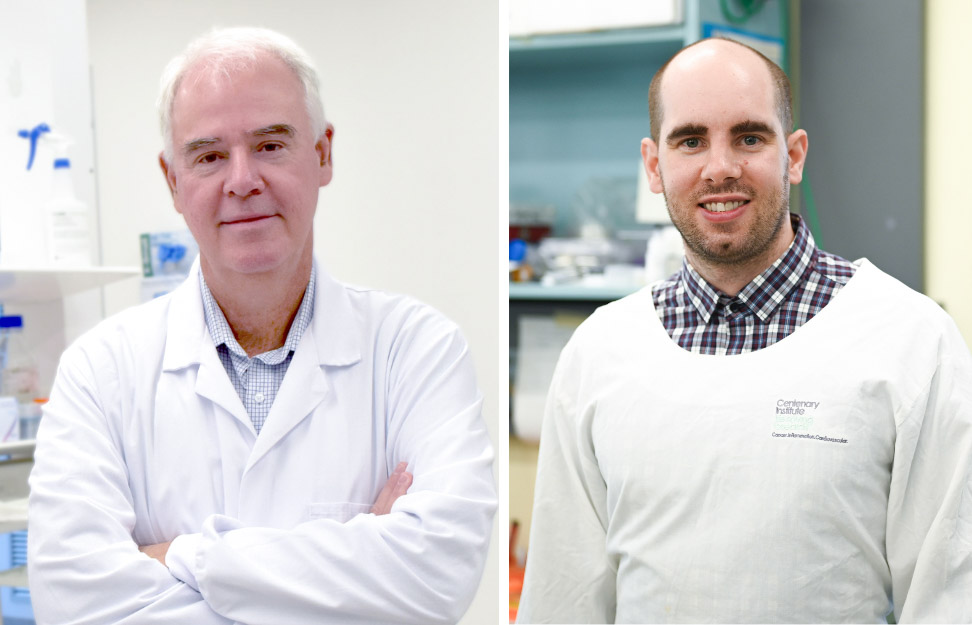
Professor Philip Hogg and Dr Alex Cole
Two Centenary Institute researchers—Professor Philip Hogg and Dr Alex Cole—have been awarded grants under the Tour de Cure cancer research funding scheme. The funding will support their groundbreaking research into melanoma, and aggressive cancers, including ovarian and pancreatic cancers.

Grant Details:

Chief Investigator: Professor Philip Hogg
Centenary Institute Centre for Cancer Innovations and UTS School of Life Sciences
Project Title: Delivering therapeutic radiation to melanoma tumours
Tour de Cure Grant: $100,000

Professor Hogg will use the funding to target melanoma, the third most common cancer in Australia, which often resists current treatments. Using an innovative molecule called Cell Death Indicator (CDI), he aims to deliver targeted radiation to dying tumour cells, triggering a reaction that also destroys nearby living tumour cells. As those cells die, they become new targets for further radiation, creating a continuous cycle that could eliminate the tumour entirely and overcome treatment resistance in patients.

“Each year, around 20,000 Australians are diagnosed with melanoma, and for many, current treatments fall short. This research is exploring an innovative approach to tackle treatment resistance and persistent disease in melanomas that cannot be cured through surgery, offering hope for better outcomes,” said Professor Hogg.

Chief Investigator: Dr Alex Cole
Centenary Institute Centre for Biomedical AI
Project Title: Developing a novel mutant p53 gain of function therapy
Tour de Cure Gant: $50,000

Dr Cole will use the funding to develop a new therapy targeting mutant p53 proteins, which are thought to drive cancer growth and spread. These proteins are associated with aggressive cancers such as ovarian, pancreatic, breast and lung cancers. Leveraging advanced technology, Dr Cole aims to create a system that breaks down these harmful proteins, potentially limiting cancer progression. This approach could pave the way for new treatment options for many cancer types while improving knowledge and understanding of existing therapies.

“There are currently no approved therapies that specifically target mutant p53, despite it being associated with so many aggressive cancers. This research is investigating a new approach to target these proteins, which could ultimately lead to much-needed treatment options for patients facing some of the most challenging cancers,” said Dr Cole.

Read more about the Centenary Institute’s research here.

People

  • Professor Philip Hogg

    Faculty

Media enquires

For all media and interview enquiries, please contact Tony Crawshaw

Phone number Phone Number +61 402 770 403

Email Email t.crawshaw@centenary.org.au

Recent Stories

  • Vaxosome launched to develop next-generation mRNA vaccines

    A new biotechnology company, Vaxosome, has been launched to develop next-generation vaccines aimed at tackling some of the world’s most challenging infectious diseases.
    News Type: Research News
    Date 10 Mar 2026
  • Centenary partners in transformative national liver health program

    The Snow Medical Research Foundation has today announced major long-term funding of $15.5 million for a new national research program targeting fatty liver disease, a condition that affects up to one in three Australians. The Centenary Institute will play a key role in the collaborative effort.
    News Type: Research News
    Date 05 Mar 2026
  • Centenary exhibition brings medical research to life in hospital spaces

    The Centenary Institute’s 'When Art Meets Science' exhibition took centre stage at the recent launch of the annual Sydney Local Health District (SLHD) March Arts program.
    News Type: Community
    Date 04 Mar 2026
  • ‘Mini hearts’ show COVID-19 virus directly infects heart tissue

    Researchers from the Centenary Institute and the University of Technology Sydney (UTS) have developed a human heart cell model demonstrating that the virus that causes COVID‑19 (SARS-CoV-2) can directly infect heart tissue, providing new insight into why some people experience serious heart complications during and after infection.
    News Type: Media release
    Date 03 Mar 2026

Subscribe to receive news on
research updates and free events

Newsletter

The Centenary Institute is a world-leading independent Medical Research Institute.

We acknowledge the Gadigal of the Eora Nation, the traditional custodians of the Country on which the Centenary Institute stands.

About

  • About us
  • Governance
  • Corporate information

Research

  • Our researchers
  • News

Careers & studies

  • Career opportunities
  • Student opportunities
  • Life at Centenary

Links

  • Contact
  • Privacy statement
  • Staff Intranet

Contact us

Building 93, Royal Prince Alfred Hospital
Missenden Rd
Camperdown NSW 2050 Australia
Telephone +61 2 9565 6100
Fax +61 2 9565 6101

Contact Privacy

Centenary Institute ABN 22 654 201 090 (DGR 1) • Centenary Institute Medical Research Foundation ABN 85 778 244 012 (DGR 2)
© 2017 Centenary Institute of Cancer Medicine and Cell Biology.

  • Linkedin
  • Facebook
  • Twitter
  • Youtube
  • Instagram