
Hogg Laboratory
Investigating how proteins work in health and disease.

Proteins are held together by two kinds of strong chemical bonds — the bonds that join the amino acids building blocks into a chain, and special “disulphide bonds” that connect pairs of cysteine building blocks. For decades, scientists assumed these disulphide bonds were fixed in place once a protein was made.
The Hogg lab overturned that idea. They discovered that these bonds are actually dynamic — constantly shifting and helping to switch protein activity on or off. Their work is revealing an entirely new layer of biology and opening the door to smarter ways to treat blood clotting or bleeding and cancer.
By harnessing this discovery, the team has created new diagnostic tools and potential cancer therapies now being tested in patients, and their innovations have already led to three spin‑out companies.



-
Biochemistry
-
Thrombosis and haemostasis
-
New diagnostics and therapies for cancer
- Protein chemistry
- Cell biology
- Medical imaging
- Disulfide bonds as switches for protein function
- Allosteric Disulfide Bonds
- Phosphoglycerate kinase acts in tumour angiogenesis as a disulphide reductase
- A first-in-human study of [68Ga]Ga-CDI: a positron emitting radiopharmaceutical for imaging tumour cell death
- Fibrinogen function achieved through multiple covalent states.
People
-
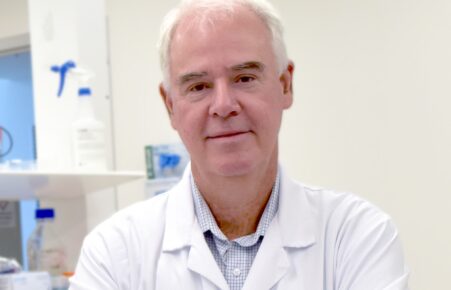
Professor Philip Hogg
Faculty
-
Dr Diego Butera
Postdoctoral Research Officer -
Dr Aster Pijning
Postdoctoral Research Officer -
Dr Mark Schreuder
Postdoctoral Research Officer -
Yolanda Tan
PhD student -
Lu Sun
Visiting scientist -
Karen Tran
PhD student -
Ella Clancy
PhD student
Student opportunities
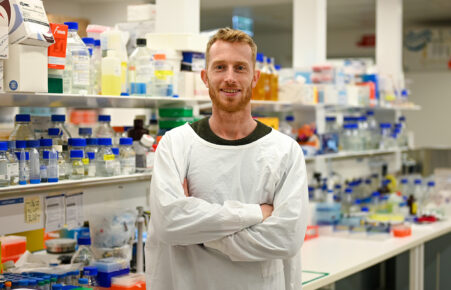
Postgraduate students and postdoctoral scientists can work alongside international authorities on protein function and researchers who have successfully developed and commercialised their discoveries. To learn more about student opportunities in the Hogg lab and for all general enquiries relating to our work, please contact Professor Philip Hogg.