

McCaughan Laboratory
Understanding liver diseases and liver cancer at the cellular and molecular level.

The McCaughan Lab uses advanced immune‑profiling technologies to uncover how different cells interact inside liver cancers. Through cutting‑edge immune mass cytometry, the team has identified a previously unknown micro‑environment within tumours — a specialised niche made up of blood‑vessel cells, perivascular macrophages, other myeloid cells and T cells.
The lab is also investigating how immune cells in the blood, healthy liver tissue and tumour tissue differ in people with hepatocellular carcinoma (HCC). Using powerful single‑cell techniques, they can examine individual cells to understand how each one behaves and contributes to disease.
Next, the team will map how these cells communicate and influence tumour development using spatial transcriptomics, imaging mass cytometry and single‑cell sequencing. These approaches allow them to see not only what cells are present, but where they are located within the tumour and how they interact.
To support this work, the McCaughan Lab has developed several mouse models of liver cancer, including a new intrahepatic cholangiocarcinoma (iCCA) model that closely mirrors the human disease. These models have already helped identify promising new therapeutic targets.
The McCaughan Lab will also play a key role in a major new national research program funded by the Snow Medical Research Foundation. This $15.5 million initiative brings together leading researchers across Australia to tackle fatty liver disease — a condition affecting up to one in three Australians — with the Centenary Institute contributing essential expertise in liver immunology, inflammation and disease mechanisms.


- Chronic liver diseases
- Liver cancer
- IMC
- Spatial transcriptomics
- Single cell analysis
- Unique mouse models
- Human liver samples
- Novel miRNA-based drug CD5-2 reduces liver tumor growth in diethylnitrosamine-treated mice by normalizing tumor vasculature and altering immune infiltrate.
- Liver-specific deletion of miR-181ab1 reduces liver tumour progression via upregulation of CBX7.
- Deletion of kif3a in CK19 positive cells leads to primary cilia loss, biliary cell proliferation and cystic liver lesions in TAA-treated mice.
- Liver transplantation in Australia and New Zealand.
- The intrahepatic signalling niche of hedgehog is defined by primary cilia positive cells during chronic liver injury.
People
-
Professor Geoff McCaughan

-
Dr Felix Marsh-Wakefield
Postdoc Research Officer
-
Dr Jinbiao Chen
Senior Scientist -
Dr Angela Ferguson
Postdoc Scientist -
Dr Costhita Santhakumar
PhD Student -
Dr David Prince
PhD Student -
Dr Madeline Gill
PhD Student
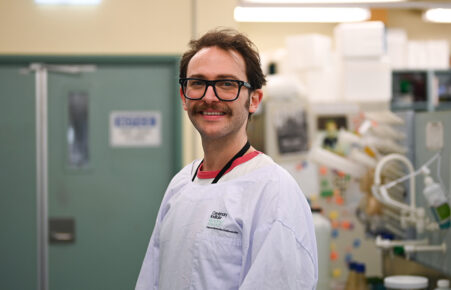


Student opportunities
To learn more about student opportunities in the McCaughan Laboratory and for all general enquiries relating to our work, please contact Professor Geoff McCaughan.