
New genetic discovery on sudden cardiac death in the young
 16 April, 2026

The finding underscores the urgent need for legislative change and accompanying funding arrangements to make postmortem genetic testing a routine part of coronial inquests in these cases. These steps would give families the best possible chance of receiving clear answers after an unexpected loss.
Sudden cardiac death affects up to three young Australians each week. It often strikes without warning and is most commonly linked to an undiagnosed inherited heart condition. In many cases however, traditional autopsy and routine genetic tests fail to reveal a cause, leaving families devastated and unsure of what happened.
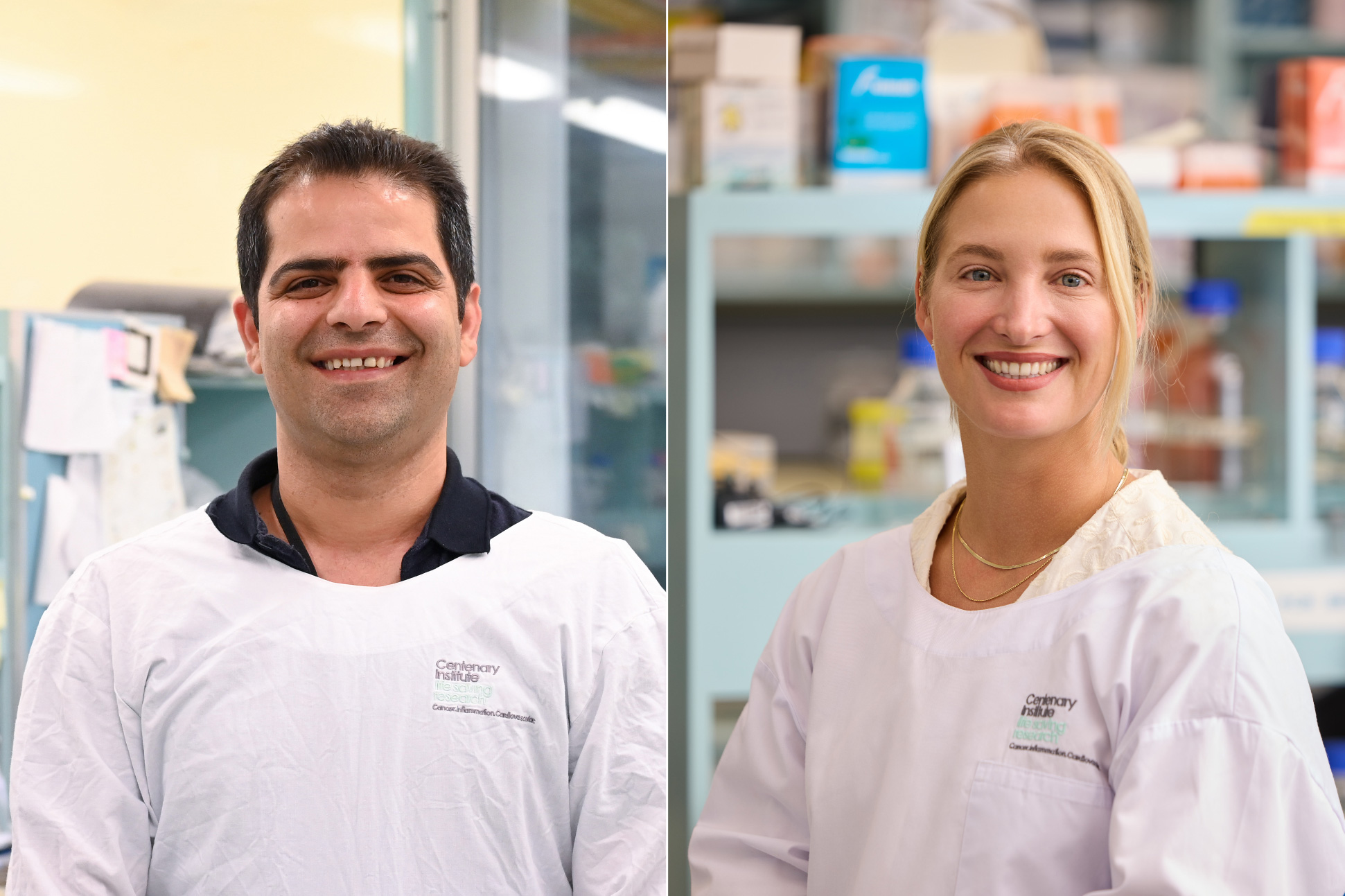
A new study published in the European Heart Journal, involving Associate Professor Richard Bagnall and Dr Charlotte Burns from the Centenary Institute’s Centre for Cardiovascular Research, in collaboration with researchers from the University of Auckland and other partners, has identified a genetic variant that could explain some of these unexplained deaths.
The team found that several individuals who died from sudden cardiac death carried an abnormal repeat expansion in the DMPK gene. This genetic expansion is already known to cause the muscle disorder myotonic dystrophy type 1. Although this condition can lead to sudden cardiac death, the young people in the study had shown no signs of muscle disease in life, meaning the risk was completely concealed.
“We found that in some of these heartbreaking cases, the cause of death could be traced to a repeat expansion in the DMPK gene even where there were no outwards symptoms of muscle disease,” said Associate Professor Bagnall, Head of the Centenary Institute’s Centre for Cardiovascular Research and co-author of the study.
“This is an important new piece of the puzzle in understanding why some young people die suddenly with no warning signs. It brings an important piece of clarity to families who have lost someone far too soon.”
The research team made the discovery using long-read DNA sequencing, an advanced technique capable of analysing large, complex regions of the genome. These repeat expansions can be difficult to detect using standard genetic testing. By applying long-read sequencing to historical DNA samples, the researchers were able to identify genetic changes that had previously gone unnoticed.
“Our results suggest that these DMPK repeat expansions could explain around one per cent of previously unexplained sudden cardiac deaths,” said Dr Burns also from the Centenary Institute’s Centre for Cardiovascular Research and a co-author of the study.
“While the number may appear small, for families who have waited years for clarity, finally understanding why their loved one died can be life changing.”
The research was supported in part by philanthropic funding from Alexandra’s Mission, a community initiative established by the family and friends of Alexandra Thoms in her memory. Alexandra died suddenly in her sleep at just 23 years old from an undiagnosed heart condition, inspiring her loved ones to support research that could save other families from similar tragedy.
“We are deeply grateful for the support of Alexandra’s Mission,” Associate Professor Bagnall said. “Their generosity helped make this discovery possible and shows how community driven philanthropy can aid scientific progress and deliver real answers for families.”
The study also highlights the need for improvements to coronial processes in Australia. The researchers argue that postmortem genetic testing should become a routine part of investigations into sudden unexplained deaths, and be funded. These steps would ensure that inherited conditions are identified early and families are given every opportunity for screening and prevention.
“Our findings show why postmortem testing should be standard practice,” Associate Professor Bagnall said. “It’s a vital tool to detect hidden genetic risks and prevent further tragedies in affected families.”
This position is supported by Rachael Casella and Danielle Green, co-founders of The Coroner’s Project, an advocacy group working to make postmortem genetic testing a routine part of coronial investigations.
“Every family who loses a child or loved one deserves to know why,” said Rachael Casella.
“Genetic testing has the power to provide these answers and crucially, to provide families the opportunity to use this information to prevent further deaths by identifying others at risk. Studies like this show why we must make postmortem genetic testing a standard part of the coronial process.”
Associate Professor Bagnall said the team hopes the study will contribute to lasting change.
“This work shows how scientific discovery, philanthropic support and thoughtful policy can work together to make a real difference. Our goal is to see these findings integrated into practice so that no family is left without answers,” he said.