Skip to content
Home page - Centenary Institute Centenary Institute

Primary menu

  • Research
        • Research

          The latest medical research into our most complex health challenges across biomedical AI, cancer, cardiovascular diseases, immunity, age-related, rare and infectious diseases.

          Learn more

        • Biomedical AI
        • Cancer Innovations
        • Cardiovascular Research
        • Infection & Immunity
        • Rare Diseases & Gene Therapy
        • Laboratories
        • Impact
        • Technologies
        • Commercialisation
  • Support us
        • Support us

          By supporting the Centenary Institute you can help improve human health through excellence in medical research.

          Learn more

        • Workplace giving
        • Host or join a fundraiser
        • Gift in your will
        • Donate in memory
        • Advise on our research
  • Careers & students
        • Careers & Students

          Postdoctoral and postgraduate students can work alongside world-leading medical researchers within state-of-the-art research facilities.

        • Careers
        • Study opportunities
  • News & events
        • News & Events

          Explore the latest research breakthroughs and ways you can take part in our series of digital and in-person events.

        • News
        • Statements
        • Events
        • Real stories
  • About us
        • About us

          We are world-leading independent medical research institute that drives collaboration to accelerate and translate solutions to our most complex health challenges.

          Learn more

        • Governance
        • Corporate information
        • Annual reports
        • Animals in research
        • Contact
  • Donate
    Centenary Institute > News > Centenary researchers aim to improve diagnosis of heavy menstrual bleeding

Centenary researchers aim to improve diagnosis of heavy menstrual bleeding

Date time 21 May, 2026
News Type News type Research News
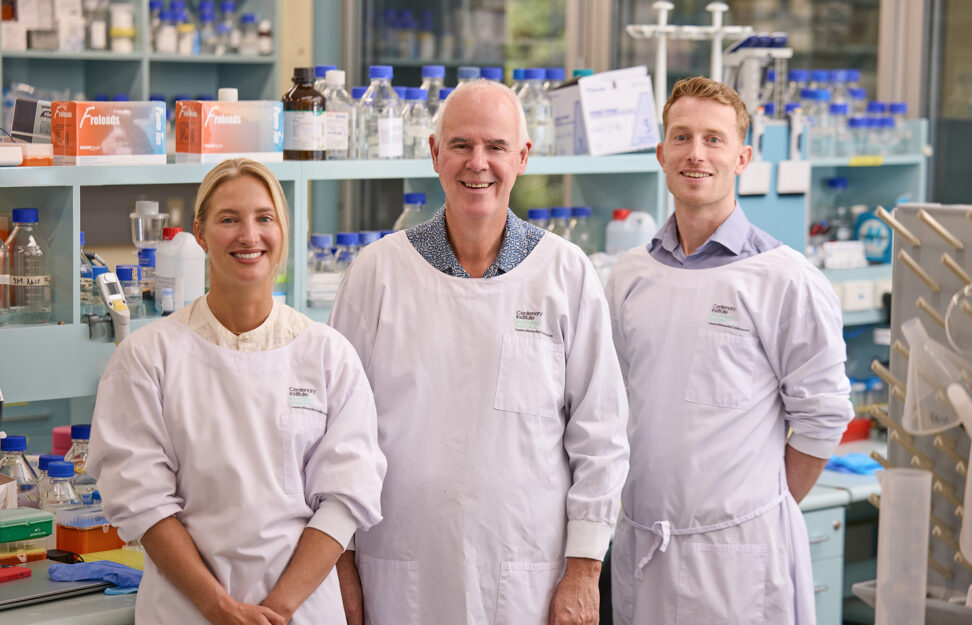
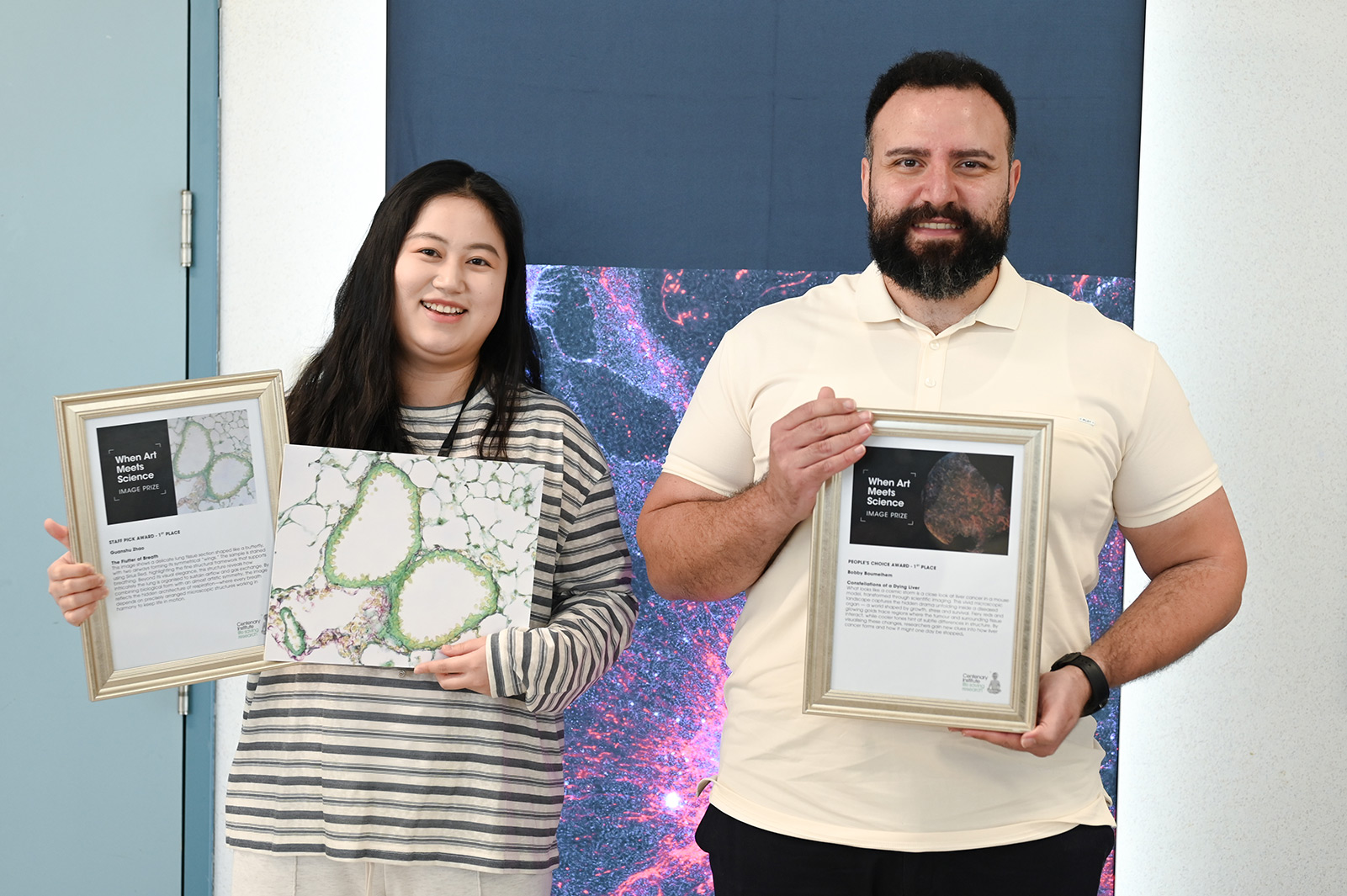
Dr Aster Pijning, Professor Philip Hogg and Dr Mark Schreuder
The Centenary Institute is implementing a new research program aimed at improving the diagnosis and care of women experiencing heavy menstrual bleeding.

Despite its prevalence, heavy menstrual bleeding remains under-recognised and under-treated. Of the 1.7 million Australian women affected, an estimated 340,000 may have an underlying bleeding disorder that remains undiagnosed. Many women do not seek medical help, and among those who do, underlying causes are often overlooked, leading to diagnostic delays of many years.

This gap in care reflects a combination of stigma surrounding menstruation, limited awareness among healthcare providers and a lack of practical screening tools, leaving many patients with ongoing symptoms, reduced quality of life and complications such as iron deficiency and anaemia.

Led by the Centenary Institute’s Dr Aster Pijning and Dr Mark Schreuder, and overseen by Professor Phil Hogg, the research program will involve a network of collaborators and aims to improve how clinicians identify and diagnose bleeding disorders in individuals with heavy menstrual bleeding.

The study will collect detailed health information and blood samples from participants, applying assessment tools and advanced laboratory testing to determine whether heavy menstrual bleeding is linked to an underlying bleeding disorder or some other cause.

Cellular, protein and genetic analysis of blood samples will be used in the investigation. As part of this work, the researchers aim to develop a simple, practical screening approach to help identify patients who may need further investigation.

Dr Pijning said the program addresses a critical and under-recognised gap in care. “Heavy menstrual bleeding is often normalised or dismissed, which means underlying causes can go undetected for years,” she said.

“By combining detailed clinical information with advanced laboratory testing, we aim to better understand the biological drivers of heavy menstrual bleeding and support earlier, more accurate diagnosis and enable personalised treatments.”

The researchers say this work is expected to improve health outcomes and quality of life for women affected by this common but often overlooked condition.
Laboratories

  • Hogg

Media enquires

For all media and interview enquiries, please contact Tony Crawshaw

Phone number Phone Number +61 402 770 403

Email Email t.crawshaw@centenary.org.au

Recent Stories

  • New insight into liver ‘cross-talk’ could help tackle fatty liver disease

    Researchers from the Centenary Institute and Tianjin Medical University have uncovered an important communication pathway inside the liver that helps control fat build-up, offering a promising new direction for tackling fatty liver disease.
    News Type: Research News
    Date 13 May 2026
  • Blood clotting protein’s hidden complexity revealed

    Researchers at the Centenary Institute have discovered that fibrinogen, a key blood clotting protein, is far more complex than previously understood, offering new insight into how blood clots form in the body.
    News Type: Research News
    Date 30 Apr 2026
  • Researcher spotlight: Dr Tracy Liu

    For Dr Xin (Tracy) Liu, fatty liver disease isn’t just a scientific challenge, it’s personal. Inspired by family members affected by metabolic conditions, she’s now a key member of Australia’s seven‑year Snow Program for Liver Health.
    News Type: Profiles
    Date 24 Apr 2026
  • New genetic discovery on sudden cardiac death in the young

    Researchers at the Centenary Institute have helped uncover a previously unrecognised genetic cause of sudden cardiac death in young people.
    News Type: Research News
    Date 16 Apr 2026

Subscribe to receive news on
research updates and free events

Newsletter

The Centenary Institute is a world-leading independent Medical Research Institute.

We acknowledge the Gadigal of the Eora Nation, the traditional custodians of the Country on which the Centenary Institute stands.

About

  • About us
  • Governance
  • Corporate information

Research

  • Our researchers
  • News

Careers & studies

  • Career opportunities
  • Student opportunities
  • Life at Centenary

Links

  • Contact
  • Privacy statement
  • Staff Intranet

Contact us

Building 93, Royal Prince Alfred Hospital
Missenden Rd
Camperdown NSW 2050 Australia
Telephone +61 2 9565 6100
Fax +61 2 9565 6101

Contact Privacy

Centenary Institute ABN 22 654 201 090 (DGR 1) • Centenary Institute Medical Research Foundation ABN 85 778 244 012 (DGR 2)
© 2017 Centenary Institute of Cancer Medicine and Cell Biology.

  • Linkedin
  • Facebook
  • Twitter
  • Youtube
  • Instagram