New initiative to allow researchers to decode disease like never before
 11 February, 2026
By revealing where genes, proteins and cells are located, and how they interact within tissue, the Spatial Pan-Omics Initiative enables researchers to map and analyse disease with unprecedented precision.
This capability will help unlock new insights into a wide range of conditions, paving the way for earlier detection, more targeted treatments and the identification of new therapeutic targets.
The initiative is delivered through Sydney Cytometry (a joint initiative of the Centenary Institute and the University of Sydney) in partnership with Sydney Mass Spectrometry, bringing together complementary expertise and advanced research infrastructure.
Centenary Institute Executive Director Professor Marc Pellegrini spoke at the launch, highlighting the success of Sydney Cytometry, a long-standing partnership between the University and Centenary that is now in its 20th year.
“Sydney Cytometry has evolved from a three-person, flow cytometry and cell-sorting facility into a major joint platform between the Centenary Institute and the University of Sydney, supporting 10 specialist staff and a diverse suite of imaging and analytical technologies,” said Professor Pellegrini.
“This growing focus on spatial omics is particularly exciting and we are proud to be part of this new initiative, which has the potential to transform both fundamental and clinical research, expand our knowledge of disease and open up new possibilities for its treatment and prevention.”
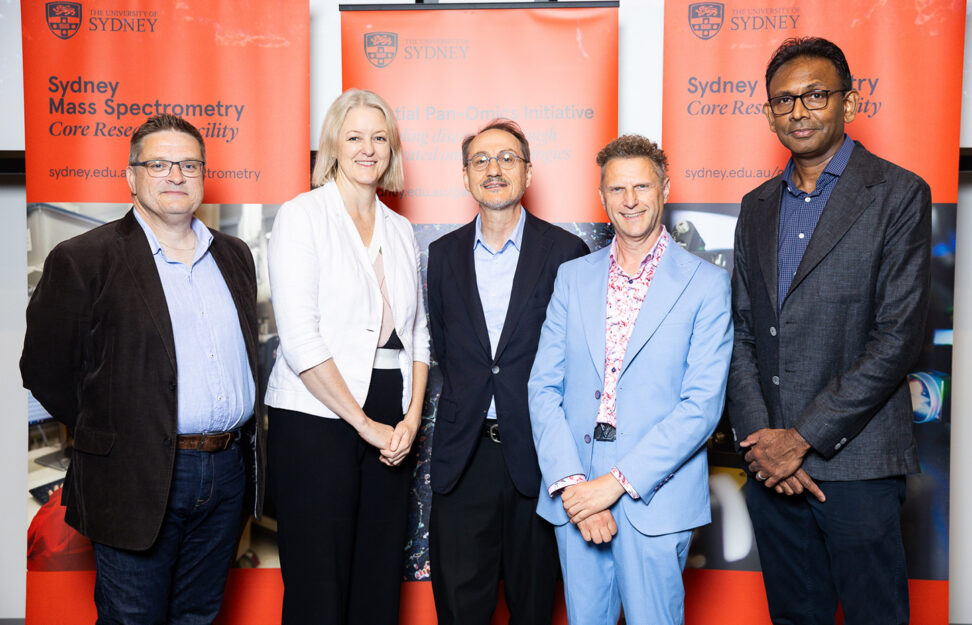
The launch event featured speakers from across the University of Sydney, including Professor Julie Cairney, Interim Deputy Vice-Chancellor (Research); Professor Simon Ringer Pro-Vice-Chancellor (Research Infrastructure); Professor Mainthan Palendira, Academic Director, Sydney Cytometry; and Professor Stuart Cordwell, Academic Director, Sydney Mass Spectrometry.
Following the launch, a research symposium (SpatialOMIX Sydney) brought together national and international experts in spatial biology to share their latest advances. The keynote address was delivered by Professor Jared K. Burks, Director, Flow Cytometry & Cell Imaging Core Facility, University of Texas MD Anderson Cancer Center.