Skip to content
Home page - Centenary Institute Centenary Institute

Primary menu

  • Research
        • Research

          The latest medical research into our most complex health challenges across biomedical AI, cancer, cardiovascular diseases, immunity, age-related, rare and infectious diseases.

          Learn more

        • Biomedical AI
        • Cancer Innovations
        • Cardiovascular Research
        • Infection & Immunity
        • Rare Diseases & Gene Therapy
        • Laboratories
        • Impact
        • Technologies
        • Commercialisation
  • Support us
        • Support us

          By supporting the Centenary Institute you can help improve human health through excellence in medical research.

          Learn more

        • Workplace giving
        • Host or join a fundraiser
        • Gift in your will
        • Donate in memory
        • Advise on our research
  • Careers & students
        • Careers & Students

          Postdoctoral and postgraduate students can work alongside world-leading medical researchers within state-of-the-art research facilities.

        • Careers
        • Study opportunities
  • News & events
        • News & Events

          Explore the latest research breakthroughs and ways you can take part in our series of digital and in-person events.

        • News
        • Statements
        • Events
        • Real stories
  • About us
        • About us

          We are world-leading independent medical research institute that drives collaboration to accelerate and translate solutions to our most complex health challenges.

          Learn more

        • Governance
        • Corporate information
        • Annual reports
        • Animals in research
        • Contact
  • Donate
    Centenary Institute > News > New nasal vaccine strategy could improve COVID-19 protection

New nasal vaccine strategy could improve COVID-19 protection

Date time 16 November, 2022
News Type News type Media release
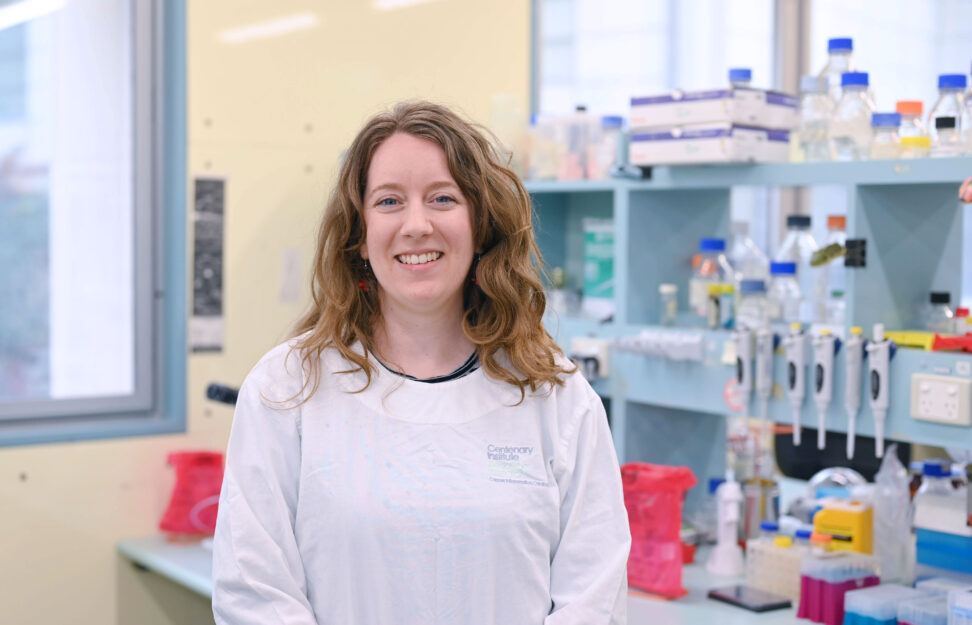
Dr Anneliese Ashhurst respiratory researcher
Dr Anneliese Ashhurst
Researchers from the Centenary Institute and the University of Sydney have developed a new nasal vaccination strategy that induces potent lung immunity and protection against the SARS-CoV-2 coronavirus.

The new vaccine approach has been tested successfully in mice and has the potential to be a powerful tool for enhancing protection against COVID-19 infection and minimising ongoing viral spread.

Made up of the SARS-CoV-2 spike protein and an adjuvant called Pam2Cys (a molecule that helps stimulate a stronger immune response in the body), that was developed by Professor Richard Payne, NHMRC Investigator in the University of Sydney’s Faculty of Science, the new vaccine was delivered via simply breathing in through the nose. It prompted substantial levels of neutralising antibodies and increased T-cell responses in the lungs and airways of the mice that were tested.

Lead author of the study, Dr Anneliese Ashhurst, research fellow in the University of Sydney’s Faculty of Medicine and Health and the Centenary Institute said that while current COVID-19 vaccines are critical, there were some limitations, including the waning of immunity post-vaccination and infection, combined with the impact of new viral variants evolving.

“Current vaccines against SARS-CoV-2 substantially reduce mortality and severe disease, but protection against infection is less effective. Vaccinated individuals are still catching COVID-19 and can spread the infection, so breakthrough infections are still occurring,” said Dr Ashhurst.

“To stop viral spread and to prevent this virus from mutating we need a new vaccine approach that blocks COVID-19 transmission,” she said.

In the mice study, the new vaccine was delivered nasally, making its way through the respiratory tract, adhering to the tissues of the nasal cavity, airways and lungs. Testing showed the generation of high levels of protective antibodies in the airways and increased T-cell responses in the lungs (T-cells help destroy SARS-CoV-2 infected cells). Significantly, none of the vaccinated mice became infected with COVID-19.

“Our vaccine differs from most current COVID-19 vaccines in that it enables generation of an immune response directly in those areas of the body that are likely to be the first point of contact for the virus – the nose, airway and lungs. This may help explain the vaccine’s effectiveness,” said Dr Ashhurst.

Senior study author, Professor Emeritus Warwick Britton AO, Head of the Centenary Institute’s Tuberculosis Research Program, said that the new vaccine strategy could play a key role in the fight against many diseases.

“Our vaccination findings have shown exciting potential in pre-clinical studies, improving protection against SARS-CoV-2 infection. The approach developed here could help break the COVID-19 infection cycle and will likely influence future coronavirus vaccine related studies,” Professor Britton said.

He added that adapted versions of the new nasal vaccine could also be potentially applied to other viral or bacterial respiratory diseases such as influenza, avian flu, SARS and MERS.

The study was published in the prestigious journal Nature Communications.

Themes

  • Inflammation

    Inflammation

People

  • Professor Warwick Britton AO

    Faculty

Media enquires

For all media and interview enquiries, please contact Tony Crawshaw

Phone number Phone Number +61 402 770 403

Email Email t.crawshaw@centenary.org.au

Media Release

New nasal vaccine strategy could improve COVID-19 protection

Download

Recent Stories

  • Tuberculosis research symposium hosted at the Centenary Institute

    The Centenary Institute recently hosted the 2026 Tuberculosis Centre of Research Excellence (TB-CRE) Annual Research Symposium. The event brought together leading researchers, clinicians and tuberculosis (TB) program partners dedicated to tackling TB across Australia and the Asia-Pacific region.
    News Type: Research News
    Date 10 Jun 2026
  • Regenerative focused research grant to repair and restore damaged hearts

    The Centenary Institute’s Associate Professor Dan Hesselson has been awarded $750,000 to accelerate pioneering research into heart regeneration, through a prestigious Senior Researcher Grant under the NSW Cardiovascular Research Capacity Program, funded by NSW Health.
    News Type: Media release
    Date 02 Jun 2026
  • Justin Clancy MP visits Centenary Institute

    The Centenary Institute recently welcomed Justin Clancy MP, Shadow Minister for Medical Research on-site, providing laboratory tours and a firsthand look at research focused on improving health outcomes for Australians.
    News Type: Institute
    Date 27 May 2026
  • Centenary researchers aim to improve diagnosis of heavy menstrual bleeding

    The Centenary Institute is implementing a new research program aimed at improving the diagnosis and care of women experiencing heavy menstrual bleeding.
    News Type: Research News
    Date 21 May 2026

Subscribe to receive news on
research updates and free events

Newsletter

The Centenary Institute is a world-leading independent Medical Research Institute.

We acknowledge the Gadigal of the Eora Nation, the traditional custodians of the Country on which the Centenary Institute stands.

About

  • About us
  • Governance
  • Corporate information

Research

  • Our researchers
  • News

Careers & studies

  • Career opportunities
  • Student opportunities
  • Life at Centenary

Links

  • Contact
  • Privacy statement
  • Staff Intranet

Contact us

Building 93, Royal Prince Alfred Hospital
Missenden Rd
Camperdown NSW 2050 Australia
Telephone +61 2 9565 6100
Fax +61 2 9565 6101

Contact Privacy

Centenary Institute ABN 22 654 201 090 (DGR 1) • Centenary Institute Medical Research Foundation ABN 85 778 244 012 (DGR 2)
© 2017 Centenary Institute of Cancer Medicine and Cell Biology.

  • Linkedin
  • Facebook
  • Twitter
  • Youtube
  • Instagram