Skip to content
Home page - Centenary Institute Centenary Institute

Primary menu

  • Research
        • Research

          The latest medical research into our most complex health challenges across biomedical AI, cancer, cardiovascular diseases, immunity, age-related, rare and infectious diseases.

          Learn more

        • Biomedical AI
        • Cancer Innovations
        • Cardiovascular Research
        • Infection & Immunity
        • Rare Diseases & Gene Therapy
        • Laboratories
        • Impact
        • Technologies
        • Commercialisation
  • Support us
        • Support us

          By supporting the Centenary Institute you can help improve human health through excellence in medical research.

          Learn more

        • Workplace giving
        • Host or join a fundraiser
        • Gift in your will
        • Donate in memory
        • Advise on our research
  • Careers & students
        • Careers & Students

          Postdoctoral and postgraduate students can work alongside world-leading medical researchers within state-of-the-art research facilities.

        • Careers
        • Study opportunities
  • News & events
        • News & Events

          Explore the latest research breakthroughs and ways you can take part in our series of digital and in-person events.

        • News
        • Statements
        • Events
        • Real stories
  • About us
        • About us

          We are world-leading independent medical research institute that drives collaboration to accelerate and translate solutions to our most complex health challenges.

          Learn more

        • Governance
        • Corporate information
        • Annual reports
        • Animals in research
        • Contact
  • Donate
    Centenary Institute > News > New treatment discovery for vascular disorder

New treatment discovery for vascular disorder

Date time 22 June, 2020
News Type News type Media release
Researchers from the Centenary Institute have discovered a potential new therapy for cerebral cavernous malformations (CCMs), a devastating disease that often affects young people and can result in stroke and seizures.

Using mouse models, the researchers found that use of the drug, CD5-2 helped normalise the vascular disorders, and inhibited the development and reduced the size of existing lesions.

The study was published in the highly respected international science journal PLOS Biology.

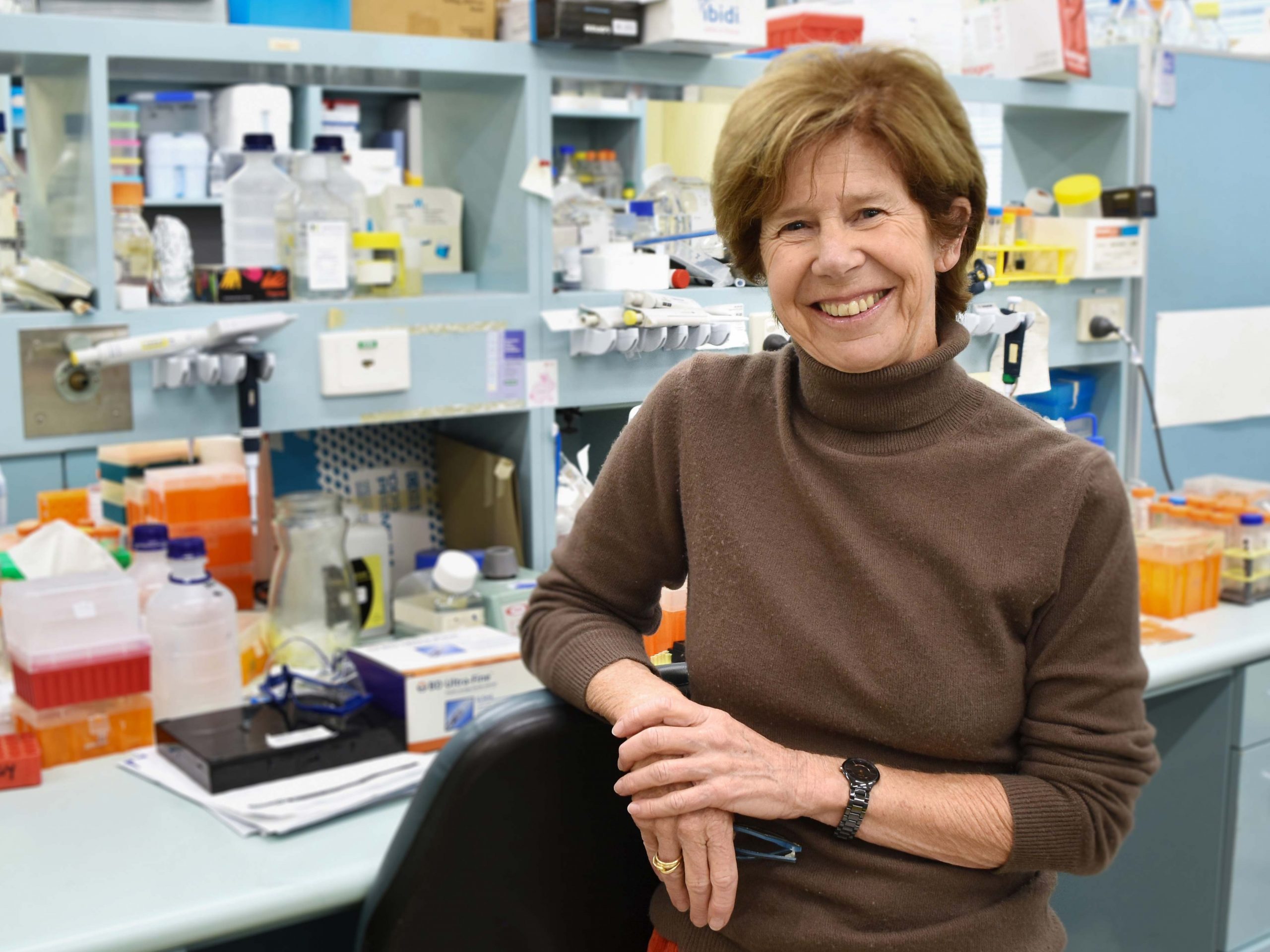
“CCMs are vascular lesions comprising clusters of abnormally thin and leaky blood vessels. Stroke or seizures can occur when blood from these vessels leaks into the surrounding brain tissue. We can’t predict when this will happen or how frequently,” said senior author on the research paper Professor Jennifer Gamble, Head of the Vascular Biology Program at the Centenary Institute.

“Most often, people don’t realise they have the disease until they have an event such as a seizure. Currently, there is little in the way of effective medical treatment for CCMs except for surgical removal of the most dangerous lesions which is limited by the size and depth of the lesions,” she said.

In the study, Professor Gamble and collaborators were able to show that a protein called VE-cadherin, critical to maintaining a healthy blood vessel lining, was seen at lower levels in mice with CCM lesions.

“We then used the drug CD5-2 to elevate VE-cadherin levels, resulting in a reduction in the lesions that were present in our CCM mice,” said Professor Gamble.

The drug CD5-2, developed by the Centenary Institute and collaborators was initially designed to combat the development of solid cancers by reducing and repairing damage caused by inflammation in blood vessels. It has since been found to have other potential benefits including as a treatment to prevent sight-loss in people with diabetes.

“Our research journey with CD5-2 is exciting,” says Professor Gamble. “CD5-2 is a drug that improves leaky blood vessels and this is a feature of many chronic diseases. We have now shown that CD5-2 is a potential novel therapy for CCMs, a disease with surgery as the only option, and that not always possible, especially if patients have multiple lesions. This discovery could lead to the first effective, non-invasive treatment option for CCMs which would be truly heartening for sufferers.”

Professor Gamble believes that CD5-2 may yield even further health benefits with research into the drug and other disease areas still ongoing.

Read the full media release here.

Access the publication here.

Themes

  • Cardiovascular Research

    Cardiovascular Research
  • Inflammation

    Inflammation

Media enquires

For all media and interview enquiries, please contact Tony Crawshaw

Phone number Phone Number +61 402 770 403

Email Email t.crawshaw@centenary.org.au

Media Release

Download

Recent Stories

  • Justin Clancy MP visits Centenary Institute

    The Centenary Institute recently welcomed Justin Clancy MP, Shadow Minister for Medical Research on-site, providing laboratory tours and a firsthand look at research focused on improving health outcomes for Australians.
    News Type: Institute
    Date 27 May 2026
  • Centenary researchers aim to improve diagnosis of heavy menstrual bleeding

    The Centenary Institute is implementing a new research program aimed at improving the diagnosis and care of women experiencing heavy menstrual bleeding.
    News Type: Research News
    Date 21 May 2026
  • New insight into liver ‘cross-talk’ could help tackle fatty liver disease

    Researchers from the Centenary Institute and Tianjin Medical University have uncovered an important communication pathway inside the liver that helps control fat build-up, offering a promising new direction for tackling fatty liver disease.
    News Type: Research News
    Date 13 May 2026
  • Blood clotting protein’s hidden complexity revealed

    Researchers at the Centenary Institute have discovered that fibrinogen, a key blood clotting protein, is far more complex than previously understood, offering new insight into how blood clots form in the body.
    News Type: Research News
    Date 30 Apr 2026

Subscribe to receive news on
research updates and free events

Newsletter

The Centenary Institute is a world-leading independent Medical Research Institute.

We acknowledge the Gadigal of the Eora Nation, the traditional custodians of the Country on which the Centenary Institute stands.

About

  • About us
  • Governance
  • Corporate information

Research

  • Our researchers
  • News

Careers & studies

  • Career opportunities
  • Student opportunities
  • Life at Centenary

Links

  • Contact
  • Privacy statement
  • Staff Intranet

Contact us

Building 93, Royal Prince Alfred Hospital
Missenden Rd
Camperdown NSW 2050 Australia
Telephone +61 2 9565 6100
Fax +61 2 9565 6101

Contact Privacy

Centenary Institute ABN 22 654 201 090 (DGR 1) • Centenary Institute Medical Research Foundation ABN 85 778 244 012 (DGR 2)
© 2017 Centenary Institute of Cancer Medicine and Cell Biology.

  • Linkedin
  • Facebook
  • Twitter
  • Youtube
  • Instagram