Skip to content
Home page - Centenary Institute Centenary Institute

Primary menu

  • Research
        • Research

          The latest medical research into our most complex health challenges across biomedical AI, cancer, cardiovascular diseases, immunity, age-related, rare and infectious diseases.

          Learn more

        • Biomedical AI
        • Cancer Innovations
        • Cardiovascular Research
        • Infection & Immunity
        • Rare Diseases & Gene Therapy
        • Laboratories
        • Impact
        • Technologies
        • Commercialisation
  • Support us
        • Support us

          By supporting the Centenary Institute you can help improve human health through excellence in medical research.

          Learn more

        • Workplace giving
        • Host or join a fundraiser
        • Gift in your will
        • Donate in memory
        • Advise on our research
  • Careers & students
        • Careers & Students

          Postdoctoral and postgraduate students can work alongside world-leading medical researchers within state-of-the-art research facilities.

        • Careers
        • Study opportunities
  • News & events
        • News & Events

          Explore the latest research breakthroughs and ways you can take part in our series of digital and in-person events.

        • News
        • Statements
        • Events
        • Real stories
  • About us
        • About us

          We are world-leading independent medical research institute that drives collaboration to accelerate and translate solutions to our most complex health challenges.

          Learn more

        • Governance
        • Corporate information
        • Annual reports
        • Animals in research
        • Contact
  • Donate
    Centenary Institute > News > New treatment hope for asthma and COPD

New treatment hope for asthma and COPD

Date time 20 August, 2020
News Type News type Research News
An international study led by the University of Glasgow, including collaborators from the Centenary Institute, has identified a new class of drugs that could pave the way to a new treatment for asthma and chronic obstructive pulmonary disease (COPD).

An international study led by the University of Glasgow, including collaborators from the Centenary Institute, has identified a new class of drugs that could pave the way to a new treatment for asthma and chronic obstructive pulmonary disease (COPD).

The breakthrough findings, published in the journal ‘Science Translational Medicine’, found that the drugs were able to reverse the symptoms of asthma in animal models.

Researchers also found that the same drugs, when applied to lung samples obtained from human donors, showed effects similar to those seen in the animal models.

Scientists believe that these combined findings offer new hope that these drugs could provide new medicines for human inflammatory lung disease.

The new approach is centred on the activation of a protein that, up until now has been known to respond to good fats contained in our diet. The protein, called free fatty acid receptor 4 (FFA4), is found in the gut and pancreas where it is activated by good dietary fats including the fish oil omega 3. Once activated FFA4 is known to help control levels of glucose in the blood.

Surprisingly the research team found FFA4 to be present in the human lung.

By designing a new class of drugs that activate FFA4 in the lung, the researchers found that the muscle that surrounds the airways relaxes allowing more air to enter the lung. They also found that activators of FFA4 reduced inflammation caused by exposure of mice to pollution, cigarette smoke and allergens like house dust mite that cause asthma.

In this way the researchers have established that activating FFA4 can reverse the key hallmarks of inflammatory lung disease heralding the prospect of new drugs for the treatment of lung disease.

“The study was a truly collaborative effort with some of the experimental work done here in Australia, utilising our world-class facilities, said Professor Phil Hansbro, co-author on the published study and Director of the Centenary UTS Centre for Inflammation.

“I’m optimistic that this breakthrough could lead to life-changing treatments for sufferers of asthma and COPD, both of which can be devastating and deadly diseases,” he said.

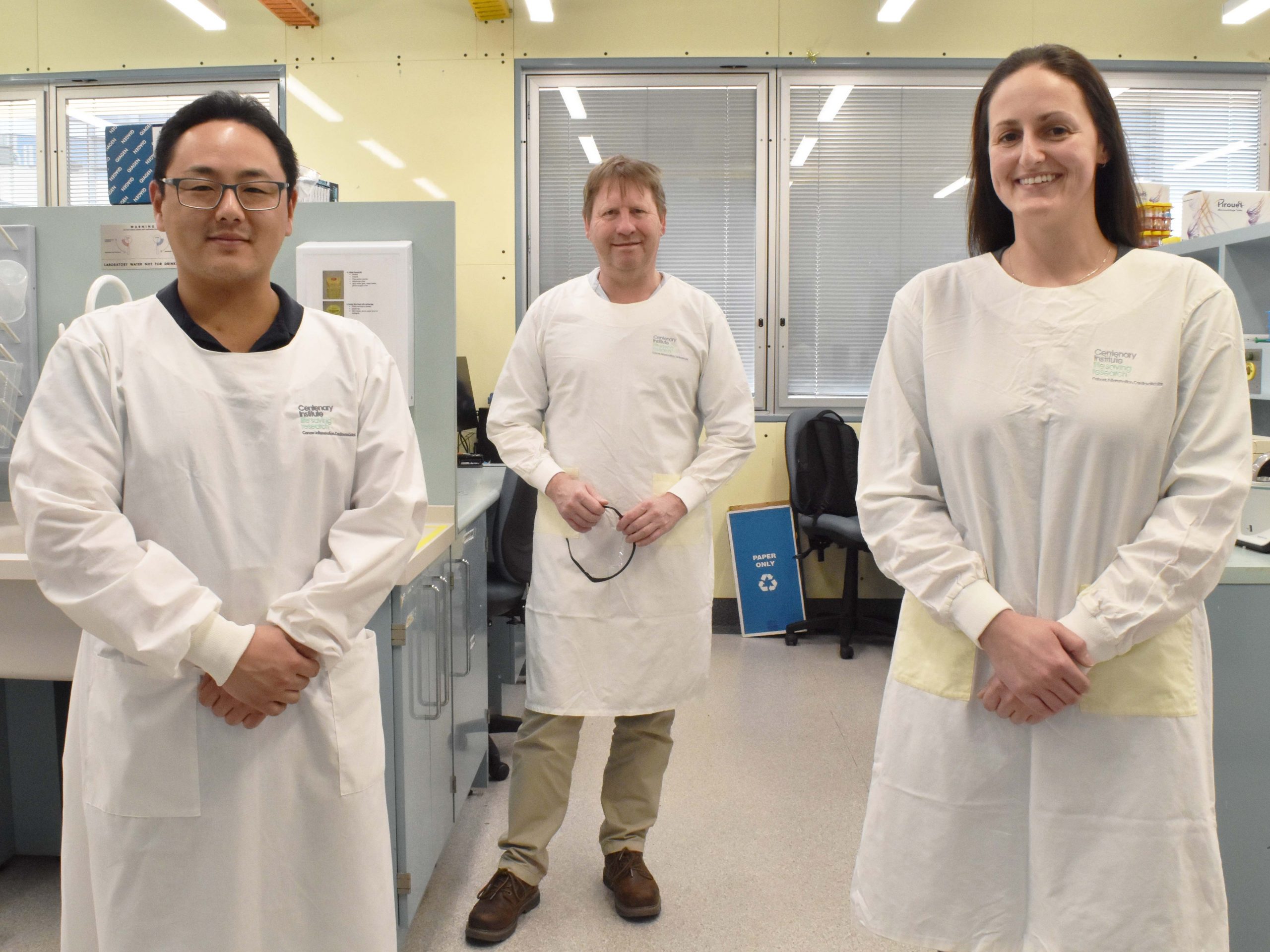
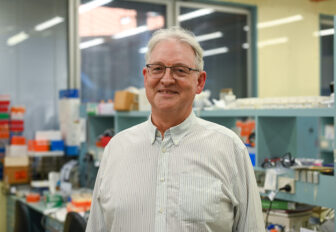
Photo (L to R): Publication co-authors from the Centenary Institute, Dr Richard Kim, Professor Phil Hansbro, Dr Chantal Donovan.

The full media release can be found here.

The research publication can be found here.
Themes

  • Inflammation

    Inflammation

Media enquires

For all media and interview enquiries, please contact Tony Crawshaw

Phone number Phone Number +61 402 770 403

Email Email t.crawshaw@centenary.org.au

Recent Stories

  • Tuberculosis research symposium hosted at the Centenary Institute

    The Centenary Institute recently hosted the 2026 Tuberculosis Centre of Research Excellence (TB-CRE) Annual Research Symposium. The event brought together leading researchers, clinicians and tuberculosis (TB) program partners dedicated to tackling TB across Australia and the Asia-Pacific region.
    News Type: Research News
    Date 10 Jun 2026
  • Regenerative focused research grant to repair and restore damaged hearts

    The Centenary Institute’s Associate Professor Dan Hesselson has been awarded $750,000 to accelerate pioneering research into heart regeneration, through a prestigious Senior Researcher Grant under the NSW Cardiovascular Research Capacity Program, funded by NSW Health.
    News Type: Media release
    Date 02 Jun 2026
  • Justin Clancy MP visits Centenary Institute

    The Centenary Institute recently welcomed Justin Clancy MP, Shadow Minister for Medical Research on-site, providing laboratory tours and a firsthand look at research focused on improving health outcomes for Australians.
    News Type: Institute
    Date 27 May 2026
  • Centenary researchers aim to improve diagnosis of heavy menstrual bleeding

    The Centenary Institute is implementing a new research program aimed at improving the diagnosis and care of women experiencing heavy menstrual bleeding.
    News Type: Research News
    Date 21 May 2026

Subscribe to receive news on
research updates and free events

Newsletter

The Centenary Institute is a world-leading independent Medical Research Institute.

We acknowledge the Gadigal of the Eora Nation, the traditional custodians of the Country on which the Centenary Institute stands.

About

  • About us
  • Governance
  • Corporate information

Research

  • Our researchers
  • News

Careers & studies

  • Career opportunities
  • Student opportunities
  • Life at Centenary

Links

  • Contact
  • Privacy statement
  • Staff Intranet

Contact us

Building 93, Royal Prince Alfred Hospital
Missenden Rd
Camperdown NSW 2050 Australia
Telephone +61 2 9565 6100
Fax +61 2 9565 6101

Contact Privacy

Centenary Institute ABN 22 654 201 090 (DGR 1) • Centenary Institute Medical Research Foundation ABN 85 778 244 012 (DGR 2)
© 2017 Centenary Institute of Cancer Medicine and Cell Biology.

  • Linkedin
  • Facebook
  • Twitter
  • Youtube
  • Instagram