
Gamble Laboratory
Understanding the ageing process of the cells that make up the blood vessels, particularly in the brain, and the impact of these changes in Alzheimer’s disease, cerebral amyloid angiopathy and other cardiovascular disease.
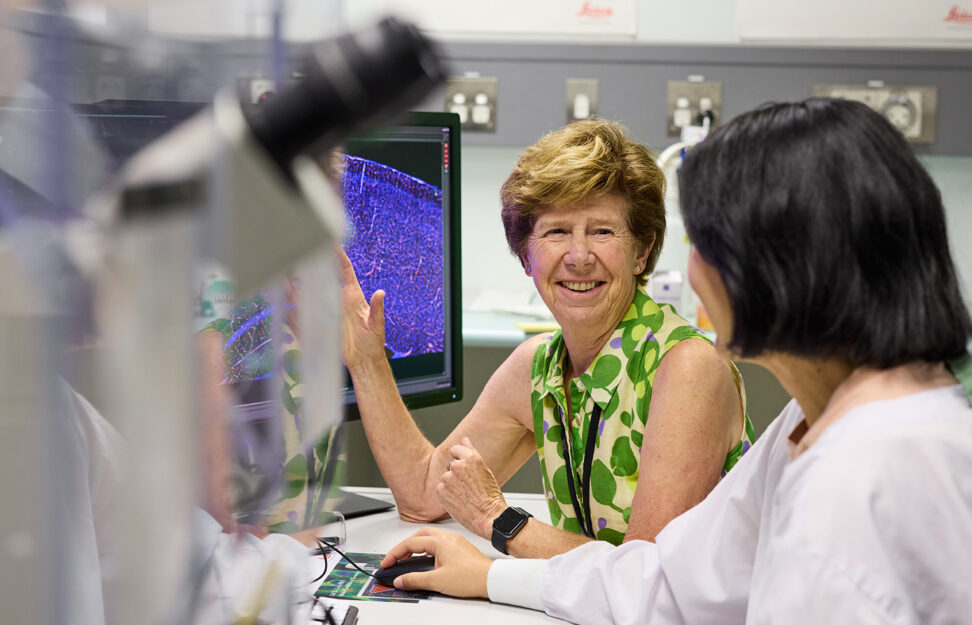
As cells age, they undergo profound structural and functional changes—a process known as senescence.
The Gamble Lab’s work focuses on the senescence of endothelial cells, the cells that line every blood vessel in the body.
We aim to understand the molecular and cellular shifts that occur as these cells become senescent, determine how senescent endothelial cells contribute to Alzheimer’s disease, cerebral amyloid angiopathy and atherosclerosis, and develop new drugs that can remove these damaged cells and repair the affected blood vessels.



- Cardiovascular disease
- Alzheimer’s disease
- Atherosclerosis
- Cellular senescence
- In vitro analysis of senescence
- In vivo models of Alzheimer’s disease, atherosclerosis, cerebral amyloid angiopathy.
- Single cell RNA sequencing
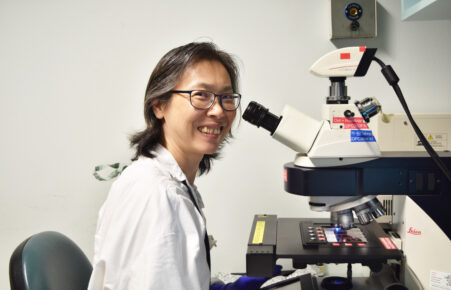
- High resolution imaging
- Vascular senescence and leak are features of the early breakdown of the blood-brain barrier in Alzheimer’s disease models
- The aging endothelium
- Therapeutic regulation of VE-cadherin with a novel oligonucleotide drug for diabetic eye complications using retinopathy mouse models
- Age-associated stresses induce an anti-inflammatory senescent phenotype in endothelial cells
- Stress-induced premature senescence mediated by a novel gene, SENEX, results in an anti-inflammatory phenotype in endothelial cells
People
-
Professor Jenny Gamble
Faculty
-
Dr Ka Ka Ting
Senior Scientist
-
Dr Paul Coleman
Senior Scientist -
Dr Ngan Ching Cheng
Senior Scientist -
Ms Hanna Gong
PhD Student
Student opportunities
PhD and Honours projects into understanding vascular ageing are available.
The investigations are focussed on identifying the biological and molecular changes that occur when endothelial cells undergo senescence (ageing) and the impact on diseases such as dementia, diabetes, heart disease and atherosclerosis.
The technologies utilised encompass, gene arrays of aged cells and tissues, molecular dissection of signalling pathways, biochemical analysis of protein structure and functions, in vitro assays of cellular function, state-of-the art imaging of cellular structures and protein localisation, animal models using genetically mutant mice and disease models and when appropriate zebrafish for vascular analysis.