Skip to content
Home page - Centenary Institute Centenary Institute

Primary menu

  • Research
        • Research

          The latest medical research into our most complex health challenges across biomedical AI, cancer, cardiovascular diseases, immunity, age-related, rare and infectious diseases.

          Learn more

        • Biomedical AI
        • Cancer Innovations
        • Cardiovascular Research
        • Infection & Immunity
        • Rare Diseases & Gene Therapy
        • Laboratories
        • Impact
        • Technologies
        • Commercialisation
  • Support us
        • Support us

          By supporting the Centenary Institute you can help improve human health through excellence in medical research.

          Learn more

        • Workplace giving
        • Host or join a fundraiser
        • Gift in your will
        • Donate in memory
        • Advise on our research
  • Careers & students
        • Careers & Students

          Postdoctoral and postgraduate students can work alongside world-leading medical researchers within state-of-the-art research facilities.

        • Careers
        • Study opportunities
  • News & events
        • News & Events

          Explore the latest research breakthroughs and ways you can take part in our series of digital and in-person events.

        • News
        • Statements
        • Events
        • Real stories
  • About us
        • About us

          We are world-leading independent medical research institute that drives collaboration to accelerate and translate solutions to our most complex health challenges.

          Learn more

        • Governance
        • Corporate information
        • Annual reports
        • Animals in research
        • Contact
  • Donate
    Centenary Institute > News > Orchid extract holds hope for prostate cancer treatment

Orchid extract holds hope for prostate cancer treatment

Date time 19 September, 2021
News Type News type Media release
Research led by the Centenary Institute has found that a compound extracted from a commonly cultivated orchid could be a potential new treatment option for prostate cancer.

The second most common form of cancer, prostate cancer is also the sixth highest cause of cancer-related mortality worldwide.

In the study, the researchers examined erianin, a natural bibenzyl compound, present in Dendrobium chrysotoxum, an orchid species native to Southeast Asia.

Erianin was found to have anti-tumour effects on both androgen-dependent (early-stage) and castration-resistant (advanced-stage) prostate cancer cells.  

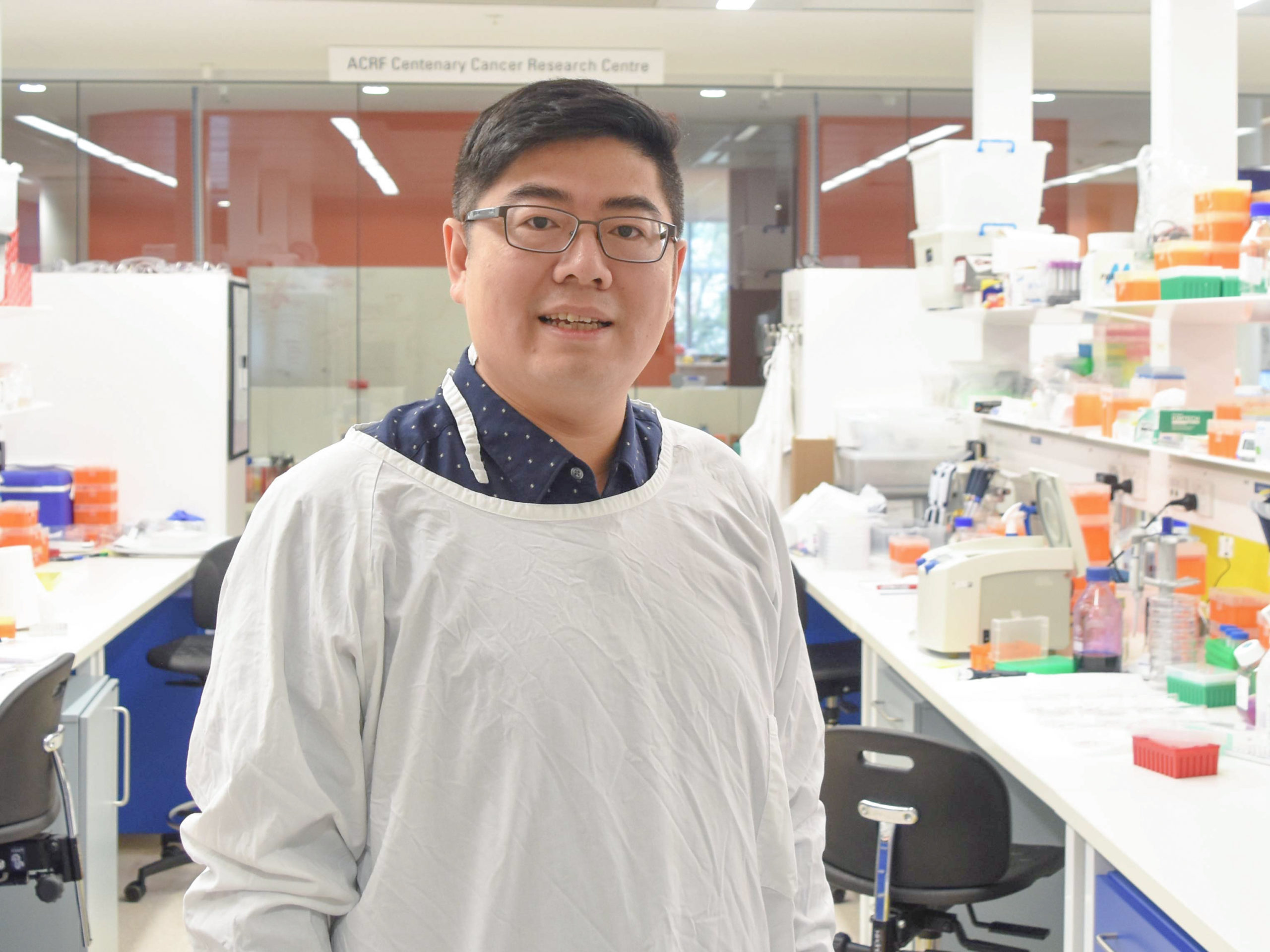
“Early in their development, prostate cancers need androgens (male sex hormones), including testosterone, to grow,” explained Dr Yanfei (Jacob) Qi, Head of the Lipid Cell Biology Laboratory at the Centenary Institute and lead researcher on the study.

“Androgen deprivation therapy, also known as hormone therapy, aims to decrease androgen levels and can help slow or limit the cancer’s growth. When the prostate cancer stops responding to this treatment and continues to grow, the prostate cancer is at an advanced stage known as castration-resistant.”

Dr Qi said that the team’s research had shown that erianin elevated levels of a fatty acid called C16 ceramide inside the androgen-dependent prostate cancer cells. This caused the cells to die through a process called endoplasmic reticulum stress-associated cell death.

In contrast, erianin alone failed to elevate C16 ceramide levels in the castration-resistant prostate cancer cells. However, artificially increasing C16 ceramide in these cells, in conjunction with the use of erianin did result in successful cell death.

“Novel treatments for prostate cancer are urgently needed,” said Dr Qi.

“Up to twenty percent of patients receiving androgen deprivation therapy progress to advanced prostate cancer within five years.”

“We’ve shown that erianin could play an important role in the development of new medical drugs that are able to target both early and late-stage prostate cancers, potentially benefiting many patients and helping save lives.”

The study was published in the journal ‘Frontiers in Oncology’.

[ENDS]

Publication: Ceramide Regulates Anti-Tumor Mechanisms of Erianin in Androgen-Sensitive and Castration-Resistant Prostate Cancers.

Themes

  • Cancer Innovations

    Cancer Innovations

People

  • Associate Professor Yanfei (Jacob) Qi

    Faculty

Media enquires

For all media and interview enquiries, please contact Tony Crawshaw

Phone number Phone Number +61 402 770 403

Email Email t.crawshaw@centenary.org.au

Media Release

Download

Recent Stories

  • Centenary researcher receives Heimburger Award

    Centenary Institute researcher Dr Aster Pijning, from the Centre for Cancer Innovations, has received a 2026 Professor Heimburger Award, which will support her research into why some people experience unexplained bleeding.
    News Type: Research News
    Date 11 Nov 2026
  • When Art Meets Science returns to Government House

    The Centenary Institute’s When Art Meets Science exhibition returned to Government House Sydney this year, as part of the Sydney Open program, giving visitors the opportunity to explore one of the city’s most iconic buildings while discovering the visual side of medical research. At the event, over 2,000 visitors viewed striking scientific images captured by ...
    News Type: Community
    Date 03 Nov 2026
  • New laboratories strengthen Centenary Institute research

    The Centenary Institute has established four new research laboratories, broadening its capabilities across the areas of infection and immunity, respiratory disease and biomedical artificial intelligence (AI).
    News Type: Media release
    Date 20 Oct 2026
  • Scholarships awarded to support rare disease and cancer research

    Two Centenary Institute researchers have received scholarship funding to support work exploring new approaches to understanding inflammation and the immune system, with the aim of improving disease treatment.
    News Type: Research News
    Date 24 Sep 2026

Subscribe to receive news on
research updates and free events

Newsletter

The Centenary Institute is a world-leading independent Medical Research Institute.

We acknowledge the Gadigal of the Eora Nation, the traditional custodians of the Country on which the Centenary Institute stands.

About

  • About us
  • Governance
  • Corporate information

Research

  • Our researchers
  • News

Careers & studies

  • Career opportunities
  • Student opportunities
  • Life at Centenary

Links

  • Contact
  • Privacy statement
  • Staff Intranet

Contact us

Building 93, Royal Prince Alfred Hospital
Missenden Rd
Camperdown NSW 2050 Australia
Telephone +61 2 9565 6100
Fax +61 2 9565 6101

Contact Privacy

Centenary Institute ABN 22 654 201 090 (DGR 1) • Centenary Institute Medical Research Foundation ABN 85 778 244 012 (DGR 2)
© 2017 Centenary Institute of Cancer Medicine and Cell Biology.

  • Linkedin
  • Facebook
  • Twitter
  • Youtube
  • Instagram