Skip to content
Home page - Centenary Institute Centenary Institute

Primary menu

  • Research
        • Research

          The latest medical research into our most complex health challenges across biomedical AI, cancer, cardiovascular diseases, immunity, age-related, rare and infectious diseases.

          Learn more

        • Biomedical AI
        • Cancer Innovations
        • Cardiovascular Research
        • Infection & Immunity
        • Rare Diseases & Gene Therapy
        • Laboratories
        • Impact
        • Technologies
        • Commercialisation
  • Support us
        • Support us

          By supporting the Centenary Institute you can help improve human health through excellence in medical research.

          Learn more

        • Workplace giving
        • Host or join a fundraiser
        • Gift in your will
        • Donate in memory
        • Advise on our research
  • Careers & students
        • Careers & Students

          Postdoctoral and postgraduate students can work alongside world-leading medical researchers within state-of-the-art research facilities.

        • Careers
        • Study opportunities
  • News & events
        • News & Events

          Explore the latest research breakthroughs and ways you can take part in our series of digital and in-person events.

        • News
        • Statements
        • Events
        • Real stories
  • About us
        • About us

          We are world-leading independent medical research institute that drives collaboration to accelerate and translate solutions to our most complex health challenges.

          Learn more

        • Governance
        • Corporate information
        • Annual reports
        • Animals in research
        • Contact
  • Donate
    Centenary Institute > News > Meet Associate Professor Mathias Francois

Meet Associate Professor Mathias Francois

Date time 4 May, 2021
News Type News type Profiles
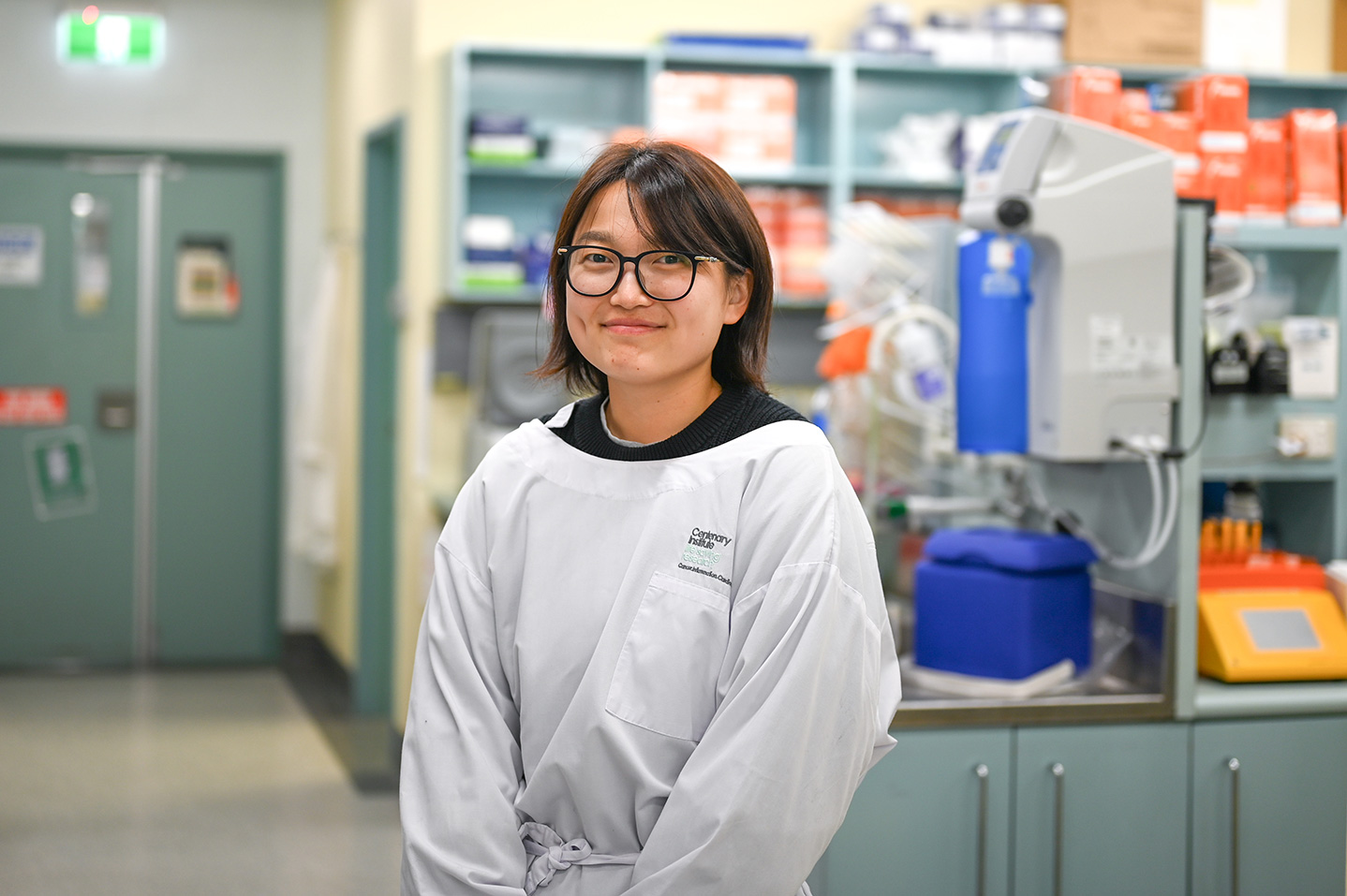
A/Prof Mathias Francois
Associate Professor Mathias Francois established the Centenary Institute’s ‘David Richmond Laboratory for Cardiovascular Development: Gene Regulation and Editing’ back in June 2019. It’s the architecture and complexity of the vascular system in humans that he finds particularly fascinating, especially their mode of assembly during embryonic development.

“The vascular system is made up of an amazing number of vessels–arteries, veins, capillaries and lymphatic vessels–which together form this incredible vascular tree of life,’ he says.

“These networks are extremely sophisticated and responsible for transporting nutrients, oxygen and waste to and from every cell in your body.”

“If all of a person’s blood and lymph vessels were laid end-to-end, they would reach a length in excess of 100,000km or two and a half times the circumference of the Earth,” says Mat.

“Understanding their organisation in space and time is therefore an incredible challenge.”

In the laboratory, Mat is focused on understanding how abnormalities in the growth and development of the body’s vasculature can lead to disease and disorders including cardiovascular illness, cancer metastasis and inflammatory diseases. He’s doing this by exploring how blood and lymph vessels assemble themselves during early development, looking for genetic clues to help develop future treatments and cures for patients.

Outside of work, Mat has always led an active and sporty life–judo, surfing, sailing and skiing have all been passionate interests.

“It’s the fun sports with a dash of adrenaline together with a high social element that have always appealed to me,” he says.

“Sharing moments and experiences with friends and then being able to relax and recall those experiences has always been important, whether it’s been surfing with a pod of dolphins or the thrill of sailing together through challenging conditions.”

With such a focus on outdoor activities, it comes as no surprise to learn that Mat grew up in the French Territory of Tahiti.

“My parents were teachers and we relocated to Tahiti when I was eight. Living on an island meant that the beach and water activities were always easily accessible and just a part of the natural order of things.”

With two young children now a key priority for Mat, the sports activity has been dialled back a notch but trips to Sydney beaches still feature highly on his family’s agenda. He’s also keen to take his kids to nearby ski fields during winter.

“They’ve yet to experience snow so that’s going to be a great fun new experience for them,” he says.
Themes

  • Cardiovascular Research

    Cardiovascular Research

Media enquires

For all media and interview enquiries, please contact Tony Crawshaw

Phone number Phone Number +61 402 770 403

Email Email t.crawshaw@centenary.org.au

Recent Stories

  • New insight into liver ‘cross-talk’ could help tackle fatty liver disease

    Researchers from the Centenary Institute and Tianjin Medical University have uncovered an important communication pathway inside the liver that helps control fat build-up, offering a promising new direction for tackling fatty liver disease.
    News Type: Research News
    Date 13 May 2026
  • Blood clotting protein’s hidden complexity revealed

    Researchers at the Centenary Institute have discovered that fibrinogen, a key blood clotting protein, is far more complex than previously understood, offering new insight into how blood clots form in the body.
    News Type: Research News
    Date 30 Apr 2026
  • Researcher spotlight: Dr Tracy Liu

    For Dr Xin (Tracy) Liu, fatty liver disease isn’t just a scientific challenge, it’s personal. Inspired by family members affected by metabolic conditions, she’s now a key member of Australia’s seven‑year Snow Program for Liver Health.
    News Type: Profiles
    Date 24 Apr 2026
  • New genetic discovery on sudden cardiac death in the young

    Researchers at the Centenary Institute have helped uncover a previously unrecognised genetic cause of sudden cardiac death in young people.
    News Type: Research News
    Date 16 Apr 2026

Subscribe to receive news on
research updates and free events

Newsletter

The Centenary Institute is a world-leading independent Medical Research Institute.

We acknowledge the Gadigal of the Eora Nation, the traditional custodians of the Country on which the Centenary Institute stands.

About

  • About us
  • Governance
  • Corporate information

Research

  • Our researchers
  • News

Careers & studies

  • Career opportunities
  • Student opportunities
  • Life at Centenary

Links

  • Contact
  • Privacy statement
  • Staff Intranet

Contact us

Building 93, Royal Prince Alfred Hospital
Missenden Rd
Camperdown NSW 2050 Australia
Telephone +61 2 9565 6100
Fax +61 2 9565 6101

Contact Privacy

Centenary Institute ABN 22 654 201 090 (DGR 1) • Centenary Institute Medical Research Foundation ABN 85 778 244 012 (DGR 2)
© 2017 Centenary Institute of Cancer Medicine and Cell Biology.

  • Linkedin
  • Facebook
  • Twitter
  • Youtube
  • Instagram