Skip to content
Home page - Centenary Institute Centenary Institute

Primary menu

  • Research
        • Research

          The latest medical research into our most complex health challenges across biomedical AI, cancer, cardiovascular diseases, immunity, age-related, rare and infectious diseases.

          Learn more

        • Biomedical AI
        • Cancer Innovations
        • Cardiovascular Research
        • Healthy Ageing
        • Infection & Immunity
        • Rare Diseases & Gene Therapy
        • Laboratories
        • Impact
        • Technologies
        • Commercialisation
  • Support us
        • Support us

          By supporting the Centenary Institute you can help improve human health through excellence in medical research.

          Learn more

        • Workplace giving
        • Host or join a fundraiser
        • Gift in your will
        • Donate in memory
        • Advise on our research
  • Careers & students
        • Careers & Students

          Postdoctoral and postgraduate students can work alongside world-leading medical researchers within state-of-the-art research facilities.

        • Careers
        • Study opportunities
  • News & events
        • News & Events

          Explore the latest research breakthroughs and ways you can take part in our series of digital and in-person events.

        • News
        • Statements
        • Events
        • Real stories
  • About us
        • About us

          We are world-leading independent medical research institute that drives collaboration to accelerate and translate solutions to our most complex health challenges.

          Learn more

        • Governance
        • Corporate information
        • Annual reports
        • Animals in research
        • Contact
  • Donate
    Centenary Institute > News > ‘Mini hearts’ show COVID-19 virus directly infects heart tissue

‘Mini hearts’ show COVID-19 virus directly infects heart tissue

Date time 3 March, 2026
News Type News type Media release
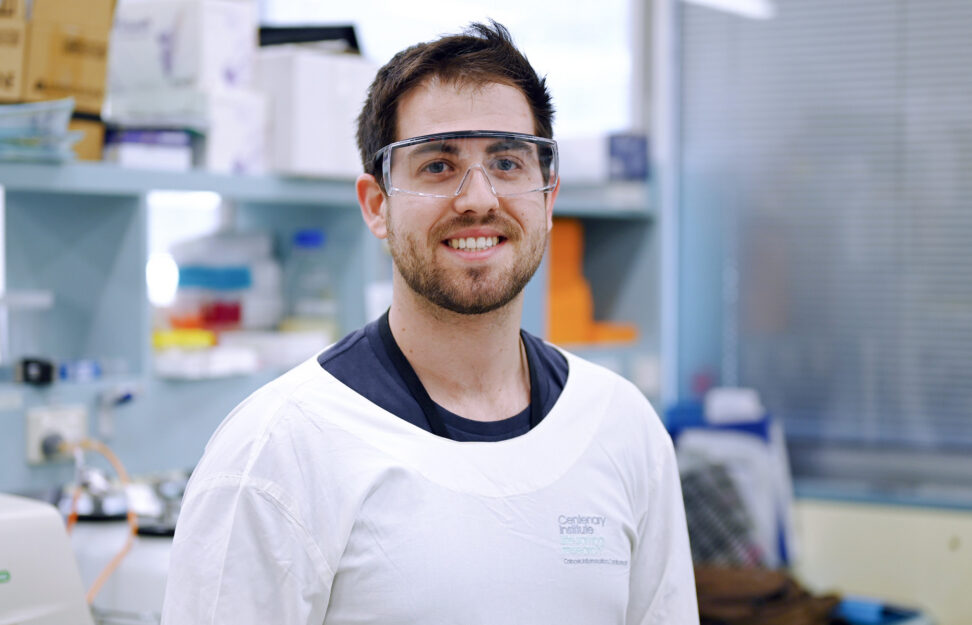
Dr Matt Johansen, Centenary Institute and UTS
Researchers from the Centenary Institute and the University of Technology Sydney (UTS) have developed a human heart cell model demonstrating that the virus that causes COVID‑19 (SARS-CoV-2) can directly infect heart tissue, providing new insight into why some people experience serious heart complications during and after infection.

The findings come as COVID-19 continues to affect Australians’ health, with more than 185,000 cases reported nationally in the past year, according to the Federal Government’s Notifiable Diseases Surveillance System.

Published in the journal Biofabrication, the study used tiny, beating clusters of human heart cells known as cardiac spheroids or ‘mini-hearts’ that behave more like real human heart tissue than standard laboratory cell models. Using this 3D system, the team showed that the SARS‑CoV‑2 virus can directly infect heart tissue, triggering damaging inflammation and changes linked to impaired heart function.

“When we began this work early in the pandemic, it was unclear whether COVID-19 was damaging the heart indirectly through inflammation and the immune system or directly by infecting heart cells themselves,” said Dr Matt Johansen, co-first and co-senior author of the study and researcher at the Centenary Institute and UTS.

“Our results suggest that the virus can directly infect human heart tissue when the conditions are right, setting off damaging processes. This could explain why heart complications are a significant concern in COVID‑19, even in people with no previous heart disease.”

Co-first author Dr Clara Liu Chung Ming, a PhD student at UTS when the research took place and now a researcher at the Heart Research Institute (HRI), said the team found that SARS-CoV-2 was able to infect and multiply within the 3D heart tissue model but not in individual heart cell types grown on their own.

“This highlights the importance of studying heart cells in a model that closely reflects how they are organised in the human heart,” Dr Liu Chung Ming said.

“It also shows that the way different heart cells interact and communicate plays a key role in how COVID-19 infection can lead to heart damage. This human-based model gives us a new way of understanding what may be happening in patients, including those who experience ongoing heart symptoms after COVID-19.”

Co-senior study author Associate Professor Carmine Gentile from UTS and Group Leader at the HRI said the model helps lay the groundwork for developing new strategies to protect the heart from COVID-19 as well as other viral threats.

“It could offer a valuable tool for testing future treatments and for helping us prevent or reduce heart damage caused by viral infection,” Associate Professor Gentile said.

“By understanding exactly how viruses can damage the heart, we can improve care for people affected by COVID‑19 and be better prepared for future pandemics.”
Media enquires

For all media and interview enquiries, please contact Tony Crawshaw

Phone number Phone Number +61 402 770 403

Email Email t.crawshaw@centenary.org.au

Media Release

‘Mini hearts’ show COVID-19 virus directly infects heart tissue

Download

Recent Stories

  • Emerging class of antibiotics to tackle global tuberculosis crisis

    Researchers from the University of Sydney and the Centenary Institute have discovered how a promising class of experimental antibiotics disrupts the bacterium that causes tuberculosis (TB), paving the way for urgently needed new treatments.
    News Type: Media release
    Date 27 Feb 2026
  • Blood test discovery could help identify head and neck cancer patients at higher risk of relapse

    Researchers at the Centenary Institute, Chris O’Brien Lifehouse, NSW Health Pathology and Royal Prince Alfred Hospital have found a potential new way to help doctors identify which head and neck cancer patients may be at higher risk of their cancer returning, using a simple blood test.
    News Type: Media release
    Date 25 Feb 2026
  • New FAP-Index could transform early detection of severe liver disease

    Researchers from the Centenary Institute have developed a new diagnostic tool, the FAP-Index, that could significantly improve how doctors identify people at risk of serious liver damage caused by metabolic fatty liver disease. The condition affects around one in three Australians with cases projected to increase by 25% to over 7 million by 2030.
    News Type: Media release
    Date 20 Feb 2026
  • First‑of‑its‑kind AI platform to improve cancer treatment decisions

    Centenary researchers have been awarded funding to commercialise a first‑of‑its‑kind medical AI platform designed to improve treatment decisions and reduce unnecessary surgeries for Australian cancer patients. The project, funded through the Australian Government’s Australia’s Economic Accelerator (AEA) Ignite program and led by Dr Yagiz Aksoy, Senior Clinical Research Fellow at Centenary’s Centre for Biomedical AI, ...
    News Type: Research News
    Date 19 Feb 2026

Subscribe to receive news on
research updates and free events

Newsletter

The Centenary Institute is a world-leading independent Medical Research Institute.

We acknowledge the Gadigal of the Eora Nation, the traditional custodians of the Country on which the Centenary Institute stands.

About

  • About us
  • Governance
  • Corporate information

Research

  • Our researchers
  • News

Careers & studies

  • Career opportunities
  • Student opportunities
  • Life at Centenary

Links

  • Contact
  • Privacy statement
  • Staff Intranet

Contact us

Building 93, Royal Prince Alfred Hospital
Missenden Rd
Camperdown NSW 2050 Australia
Telephone +61 2 9565 6100
Fax +61 2 9565 6101

Contact Privacy

Centenary Institute ABN 22 654 201 090 (DGR 1) • Centenary Institute Medical Research Foundation ABN 85 778 244 012 (DGR 2)
© 2017 Centenary Institute of Cancer Medicine and Cell Biology.

  • Linkedin
  • Facebook
  • Twitter
  • Youtube
  • Instagram