Skip to content
Home page - Centenary Institute Centenary Institute

Primary menu

  • Research
        • Research

          The latest medical research into our most complex health challenges across biomedical AI, cancer, cardiovascular diseases, immunity, age-related, rare and infectious diseases.

          Learn more

        • Biomedical AI
        • Cancer Innovations
        • Cardiovascular Research
        • Infection & Immunity
        • Rare Diseases & Gene Therapy
        • Laboratories
        • Impact
        • Technologies
        • Commercialisation
  • Support us
        • Support us

          By supporting the Centenary Institute you can help improve human health through excellence in medical research.

          Learn more

        • Workplace giving
        • Host or join a fundraiser
        • Gift in your will
        • Donate in memory
        • Advise on our research
  • Careers & students
        • Careers & Students

          Postdoctoral and postgraduate students can work alongside world-leading medical researchers within state-of-the-art research facilities.

        • Careers
        • Study opportunities
  • News & events
        • News & Events

          Explore the latest research breakthroughs and ways you can take part in our series of digital and in-person events.

        • News
        • Statements
        • Events
        • Real stories
  • About us
        • About us

          We are world-leading independent medical research institute that drives collaboration to accelerate and translate solutions to our most complex health challenges.

          Learn more

        • Governance
        • Corporate information
        • Annual reports
        • Animals in research
        • Contact
  • Donate
    Centenary Institute > News > New gene discoveries improve diagnosis of inherited heart disease

New gene discoveries improve diagnosis of inherited heart disease

Date time 13 November, 2025
News Type News type Media release
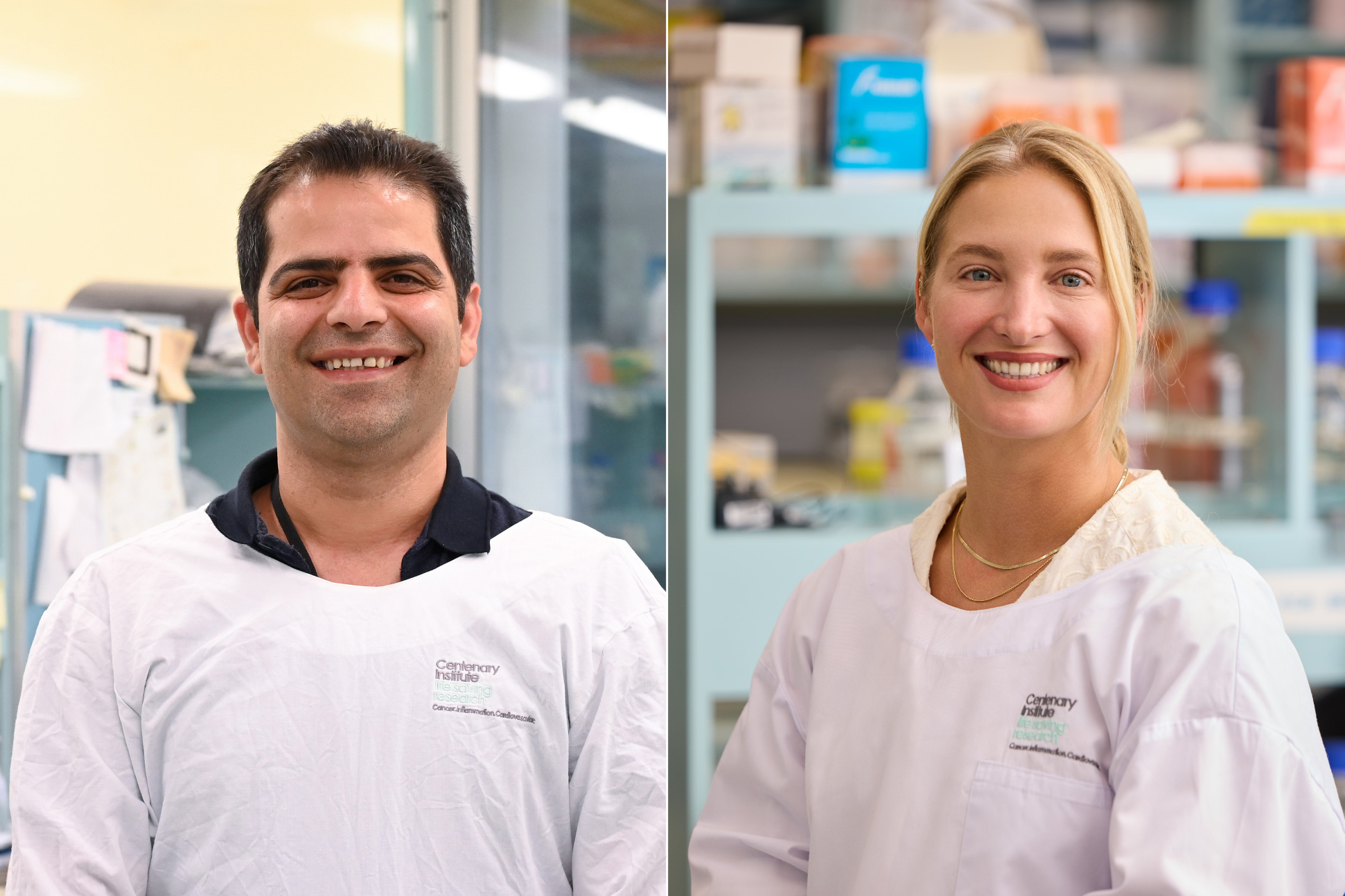
Yuchen Chang and Associate Professor Richard Bagnall
Centenary Institute researchers have uncovered new genetic causes of inherited heart conditions, providing families with vital answers to guide treatment and prevention.

Inherited heart conditions affect more than one in every 200 Australians and are a major cause of illness and premature death.

The study, published in Genetics in Medicine, re-examined data from the Australian Genomics Cardiovascular Disorders Flagship, a national program that originally sequenced the genetic material of more than 500 Australians living with cardiomyopathy (heart muscle disease) or primary arrhythmia syndromes (abnormal heart rhythms).

The research team applied updated analysis methods, examined a broader range of heart-related genes and ran advanced laboratory tests to check the impact of uncertain DNA variations in the genomic dataset. With this deeper investigation, they were able to give an extra 4% of participants a confirmed genetic diagnosis that earlier testing had missed.

“Each additional diagnosis has a direct and tangible impact,” said Associate Professor Richard Bagnall, Head of the Centre for Cardiovascular Research at the Centenary Institute and senior author of the study.

“It explains why a person developed heart disease, informs their treatment and can guide genetic screening for relatives who may also be at risk.”

The study also confirmed a new disease-causing gene (TBX20) for cardiomyopathy that had previously been omitted in standard testing.

“These results show us that the genetic basis of heart disease is broader and more complex than we once thought,” said Yuchen Chang, PhD candidate at the University of Sydney and the Centenary Institute, and first author of the study.

“By continually updating gene panels (checklists of genes linked to specific heart conditions) and validating uncertain results in the laboratory, we can improve diagnosis rates and deepen our understanding of these conditions.”

The researchers say that re-analysing genomic data with the latest tools and knowledge will continue to improve genetic diagnosis for inherited heart conditions. This means more families can receive timely answers, clinicians can tailor care more effectively and new discoveries can be more quickly put into practice to benefit patients.

People

  • Associate Professor Richard Bagnall

    Head, Centre for Cardiovascular Research

Media enquires

For all media and interview enquiries, please contact Tony Crawshaw

Phone number Phone Number +61 402 770 403

Email Email t.crawshaw@centenary.org.au

Media Release

New gene discoveries improve diagnosis of inherited heart disease

Download

Recent Stories

  • When Art Meets Science returns to Government House

    The Centenary Institute’s When Art Meets Science exhibition returned to Government House Sydney this year, as part of the Sydney Open program, giving visitors the opportunity to explore one of the city’s most iconic buildings while discovering the visual side of medical research. At the event, over 2,000 visitors viewed striking scientific images captured by ...
    News Type: Community
    Date 03 Nov 2026
  • New laboratories strengthen Centenary Institute research

    The Centenary Institute has established four new research laboratories, broadening its capabilities across the areas of infection and immunity, respiratory disease and biomedical artificial intelligence (AI).
    News Type: Media release
    Date 20 Oct 2026
  • Scholarships awarded to support rare disease and cancer research

    Two Centenary Institute researchers have received scholarship funding to support work exploring new approaches to understanding inflammation and the immune system, with the aim of improving disease treatment.
    News Type: Research News
    Date 24 Sep 2026
  • Modified BCG vaccine strengthens protection against TB

    Researchers from the Centenary Institute and the University of Sydney have developed a modified version of the tuberculosis (TB) vaccine BCG that provided stronger and more sustained protection against TB. In preclinical tests in mice, the modified vaccine showed potential as a new approach to improving the effectiveness of TB vaccination. A bacterial infection caused ...
    News Type: Media release
    Date 15 Sep 2026

Subscribe to receive news on
research updates and free events

Newsletter

The Centenary Institute is a world-leading independent Medical Research Institute.

We acknowledge the Gadigal of the Eora Nation, the traditional custodians of the Country on which the Centenary Institute stands.

About

  • About us
  • Governance
  • Corporate information

Research

  • Our researchers
  • News

Careers & studies

  • Career opportunities
  • Student opportunities
  • Life at Centenary

Links

  • Contact
  • Privacy statement
  • Staff Intranet

Contact us

Building 93, Royal Prince Alfred Hospital
Missenden Rd
Camperdown NSW 2050 Australia
Telephone +61 2 9565 6100
Fax +61 2 9565 6101

Contact Privacy

Centenary Institute ABN 22 654 201 090 (DGR 1) • Centenary Institute Medical Research Foundation ABN 85 778 244 012 (DGR 2)
© 2017 Centenary Institute of Cancer Medicine and Cell Biology.

  • Linkedin
  • Facebook
  • Twitter
  • Youtube
  • Instagram