Skip to content
Home page - Centenary Institute Centenary Institute

Primary menu

  • Research
        • Research

          The latest medical research into our most complex health challenges across biomedical AI, cancer, cardiovascular diseases, immunity, age-related, rare and infectious diseases.

          Learn more

        • Biomedical AI
        • Cancer Innovations
        • Cardiovascular Research
        • Infection & Immunity
        • Rare Diseases & Gene Therapy
        • Laboratories
        • Impact
        • Technologies
        • Commercialisation
  • Support us
        • Support us

          By supporting the Centenary Institute you can help improve human health through excellence in medical research.

          Learn more

        • Workplace giving
        • Host or join a fundraiser
        • Gift in your will
        • Donate in memory
        • Advise on our research
  • Careers & students
        • Careers & Students

          Postdoctoral and postgraduate students can work alongside world-leading medical researchers within state-of-the-art research facilities.

        • Careers
        • Study opportunities
  • News & events
        • News & Events

          Explore the latest research breakthroughs and ways you can take part in our series of digital and in-person events.

        • News
        • Statements
        • Events
        • Real stories
  • About us
        • About us

          We are world-leading independent medical research institute that drives collaboration to accelerate and translate solutions to our most complex health challenges.

          Learn more

        • Governance
        • Corporate information
        • Annual reports
        • Animals in research
        • Contact
  • Donate
    Centenary Institute > News > New discovery tackles treatment-resistant melanoma

New discovery tackles treatment-resistant melanoma

Date time 26 October, 2021
News Type News type Media release
Researchers from the Centenary Institute have developed a new approach to fighting melanomas that fail to respond – or are resistant – to standard treatments.

In their pre-clinical study, the researchers found that use of the chemotherapy drug temozolomide, in combination with chloroquine, was able to kill medication-resistant melanoma cells.

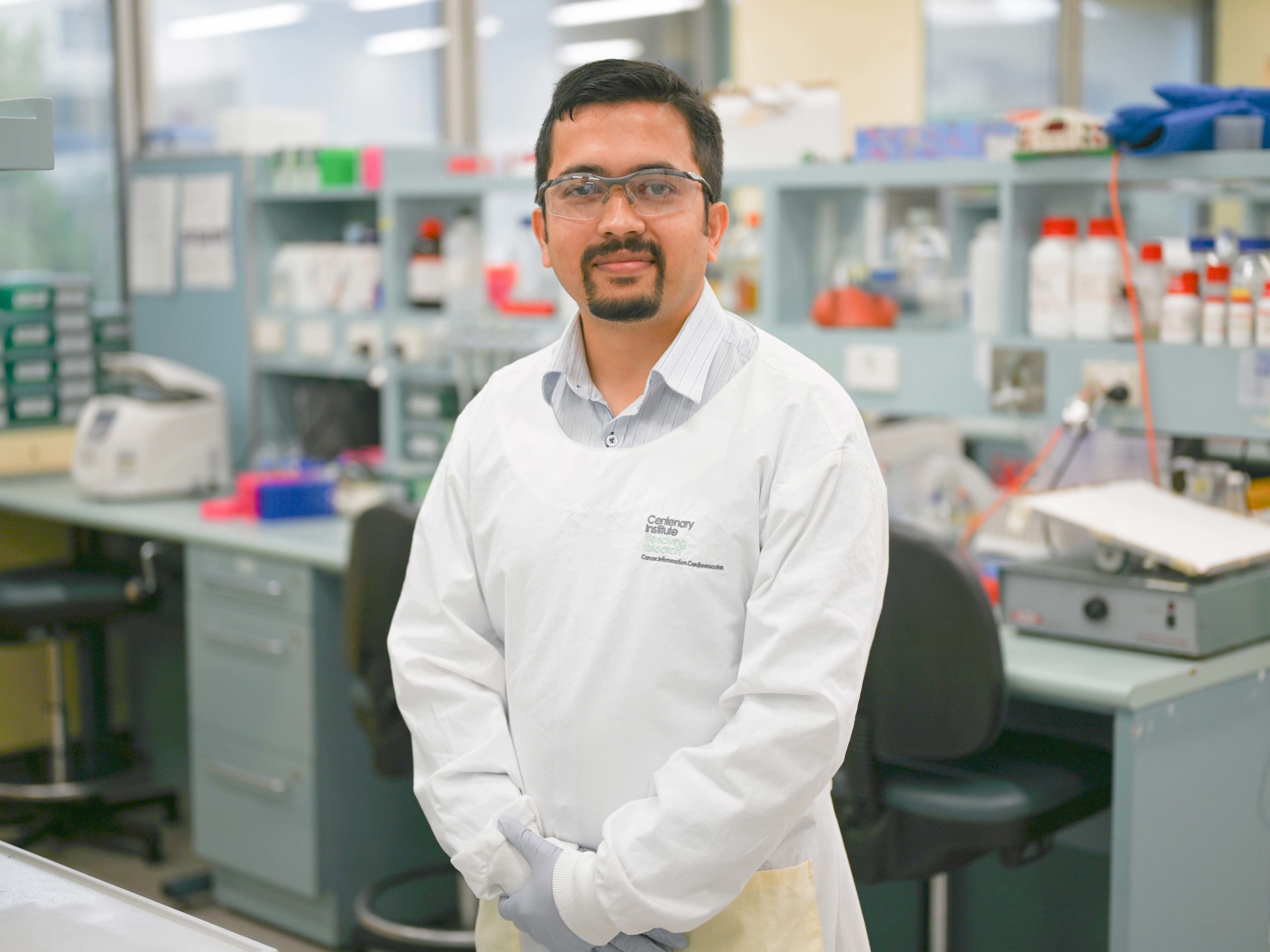
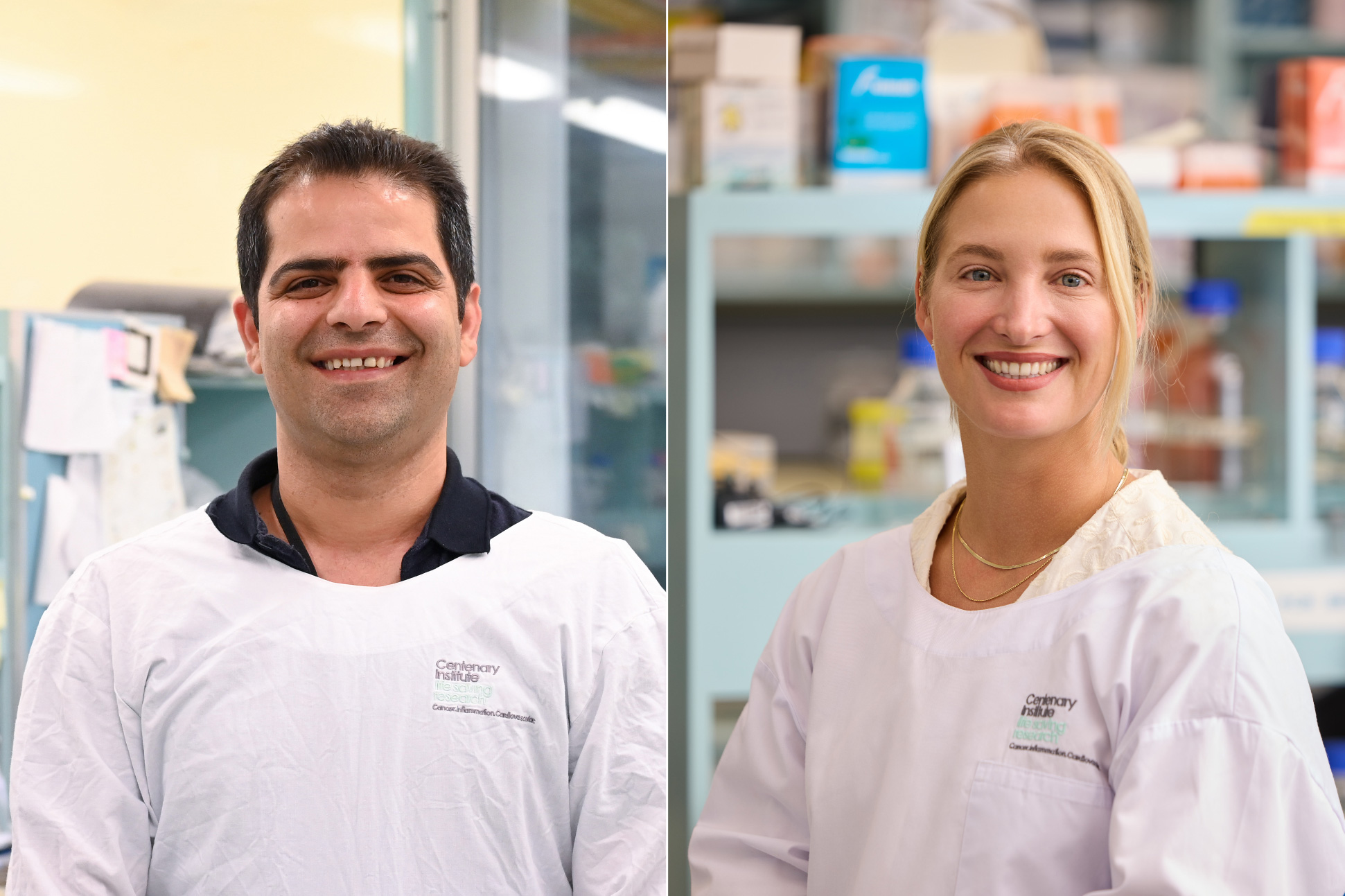
Joint senior author of the study Dr Abdullah Al Emran (pictured), affiliated with both the Centenary Institute and Harvard Medical School, said that melanoma was often quite ‘plastic’ in nature.  

“What we mean by this is that melanoma can change its biology to more resistant forms during treatment. The cancer cells adapt to treatment over time and continue to survive and grow. Our use of temozolomide and chloroquine has shown however that these resistant forms are still able to be killed,” said Dr Emran.

In the study, the researchers investigated BRAF positive melanoma cells. Accounting for about half of all melanomas, a mutation in the BRAF gene promotes cancer cell growth.

The use of temozolomide and chloroquine activated innate death (self-destruct) mechanisms within the melanoma cells targeted. These death mechanisms are normally triggered by the immune system when trying to resist viral infections or attacks from other micro-organisms.

Professor Peter Hersey, Head of the Centenary Institute’s Melanoma Oncology and Immunology Program and joint senior author of the paper, said that although treatment of melanoma over the past 10 years had improved enormously, only about 50% of patients survived beyond five years.

“We need new approaches to overcome this treatment resistance and to reduce mortality rates. Our findings have important implications for future patients failing current melanoma treatments.”

The study was published in the Journal of Investigative Dermatology and utilised melanoma cells from patients as well as experimental mouse models.

Publication:
Repurposing melanoma chemotherapy to activate inflammasomes in treatment of BRAF/MAPK inhibitor resistant melanoma.

Themes

  • Cancer Innovations

    Cancer Innovations

Media enquires

For all media and interview enquiries, please contact Tony Crawshaw

Phone number Phone Number +61 402 770 403

Email Email t.crawshaw@centenary.org.au

Media Release

Download

Recent Stories

  • Protein form linked to severe COVID-19 and lung disease risk

    An international study involving the Centenary Institute and the University of Sydney has uncovered a previously hidden genetic factor that appears to help explain why some people develop lung fibrosis, a condition in which lung tissue becomes damaged and scarred, or experience severe COVID-19.
    News Type: Research News
    Date 01 Jul 2026
  • Tuberculosis research symposium hosted at the Centenary Institute

    The Centenary Institute recently hosted the 2026 Tuberculosis Centre of Research Excellence (TB-CRE) Annual Research Symposium. The event brought together leading researchers, clinicians and tuberculosis (TB) program partners dedicated to tackling TB across Australia and the Asia-Pacific region.
    News Type: Research News
    Date 10 Jun 2026
  • Regenerative focused research grant to repair and restore damaged hearts

    The Centenary Institute’s Associate Professor Dan Hesselson has been awarded $750,000 to accelerate pioneering research into heart regeneration, through a prestigious Senior Researcher Grant under the NSW Cardiovascular Research Capacity Program, funded by NSW Health.
    News Type: Media release
    Date 02 Jun 2026
  • Justin Clancy MP visits Centenary Institute

    The Centenary Institute recently welcomed Justin Clancy MP, Shadow Minister for Medical Research on-site, providing laboratory tours and a firsthand look at research focused on improving health outcomes for Australians.
    News Type: Institute
    Date 27 May 2026

Subscribe to receive news on
research updates and free events

Newsletter

The Centenary Institute is a world-leading independent Medical Research Institute.

We acknowledge the Gadigal of the Eora Nation, the traditional custodians of the Country on which the Centenary Institute stands.

About

  • About us
  • Governance
  • Corporate information

Research

  • Our researchers
  • News

Careers & studies

  • Career opportunities
  • Student opportunities
  • Life at Centenary

Links

  • Contact
  • Privacy statement
  • Staff Intranet

Contact us

Building 93, Royal Prince Alfred Hospital
Missenden Rd
Camperdown NSW 2050 Australia
Telephone +61 2 9565 6100
Fax +61 2 9565 6101

Contact Privacy

Centenary Institute ABN 22 654 201 090 (DGR 1) • Centenary Institute Medical Research Foundation ABN 85 778 244 012 (DGR 2)
© 2017 Centenary Institute of Cancer Medicine and Cell Biology.

  • Linkedin
  • Facebook
  • Twitter
  • Youtube
  • Instagram