Skip to content
Home page - Centenary Institute Centenary Institute

Primary menu

  • Research
        • Research

          The latest medical research into our most complex health challenges across biomedical AI, cancer, cardiovascular diseases, immunity, age-related, rare and infectious diseases.

          Learn more

        • Biomedical AI
        • Cancer Innovations
        • Cardiovascular Research
        • Healthy Ageing
        • Infection & Immunity
        • Rare Diseases & Gene Therapy
        • Laboratories
        • Impact
        • Technologies
        • Commercialisation
  • Support us
        • Support us

          By supporting the Centenary Institute you can help improve human health through excellence in medical research.

          Learn more

        • Workplace giving
        • Host or join a fundraiser
        • Gift in your will
        • Donate in memory
        • Advise on our research
  • Careers & students
        • Careers & Students

          Postdoctoral and postgraduate students can work alongside world-leading medical researchers within state-of-the-art research facilities.

        • Careers
        • Study opportunities
  • News & events
        • News & Events

          Explore the latest research breakthroughs and ways you can take part in our series of digital and in-person events.

        • News
        • Statements
        • Events
        • Real stories
  • About us
        • About us

          We are world-leading independent medical research institute that drives collaboration to accelerate and translate solutions to our most complex health challenges.

          Learn more

        • Governance
        • Corporate information
        • Annual reports
        • Animals in research
        • Contact
  • Donate
    Centenary Institute > News > Boost to world-class melanoma research

Boost to world-class melanoma research

Date time 24 May, 2021
News Type News type Media release
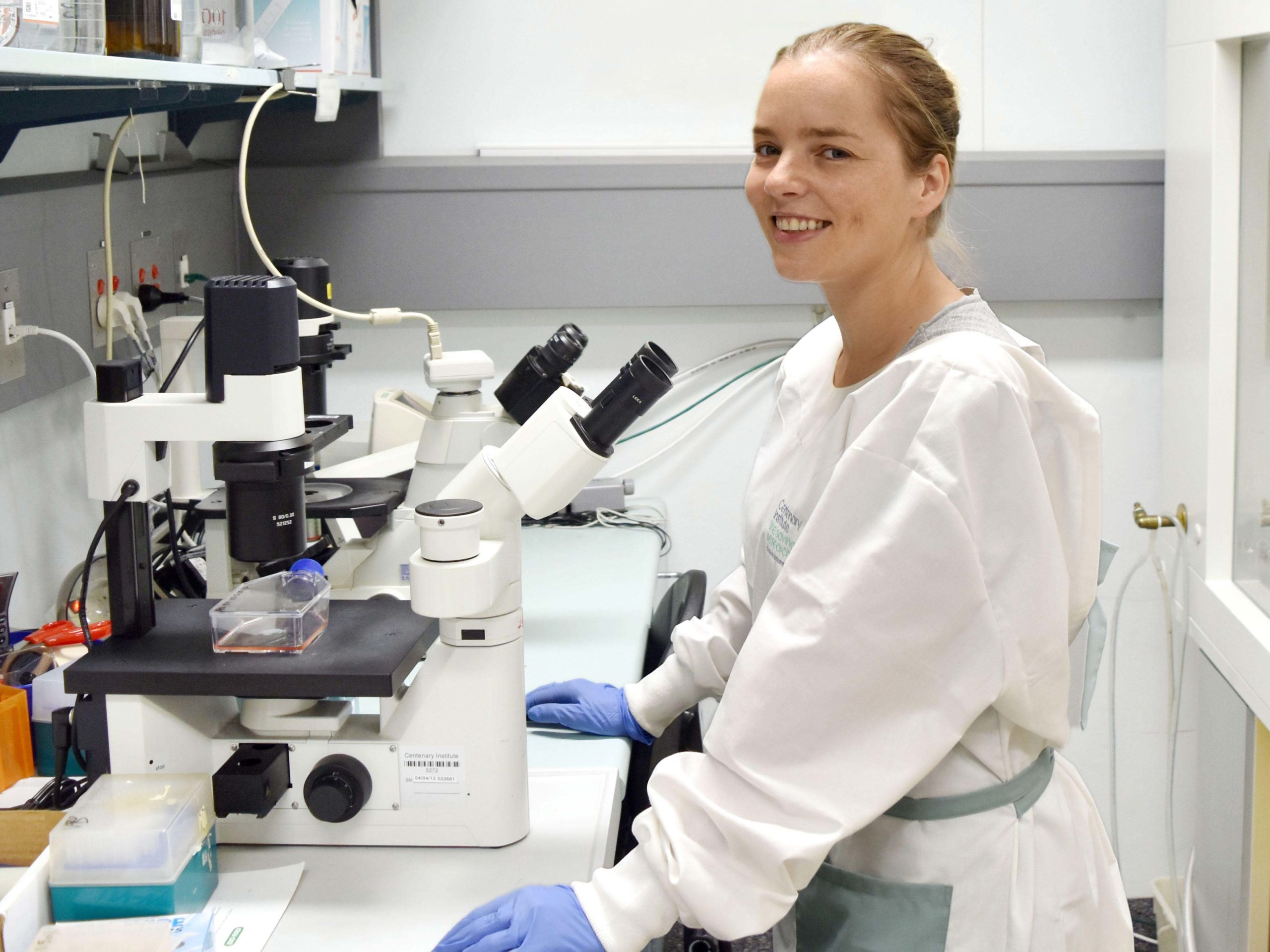
World-class research into melanoma, the deadliest form of skin cancer, has been boosted with Dr Jessamy Tiffen, Head of the Centenary Institute's Melanoma Epigenetics Laboratory, receiving a $447,000 project grant from Cancer Council NSW.

The grant will be used by Dr Tiffen to investigate new treatment approaches for patients with advanced stage melanoma.

Dr Tiffen said that new immunotherapies and targeted treatments provided hope for patients with advanced melanoma. However, for many patients, these treatments were ineffective or only worked for a limited time before the cancer developed resistance.

“Sadly, the majority of advanced melanoma patients will suffer relapse and die from the disease. There is an urgent need to identify new drugs for those individuals with no treatment options and to develop new drugs that can prevent recurrence of tumours,” said Dr Tiffen.

The focus of Dr Tiffen’s project will be the investigation of the histone methylation process which she believes plays an important role in driving treatment resistance in melanoma.

“Histone methylation involves protein activity around your DNA that can change the way your genes are expressed and can lead to changes in cell behaviour,” said Dr Tiffen.

“We believe that abnormal levels of histone methylation in both melanoma cells and dysfunctional immune cells could be causing resistance to treatment.”   

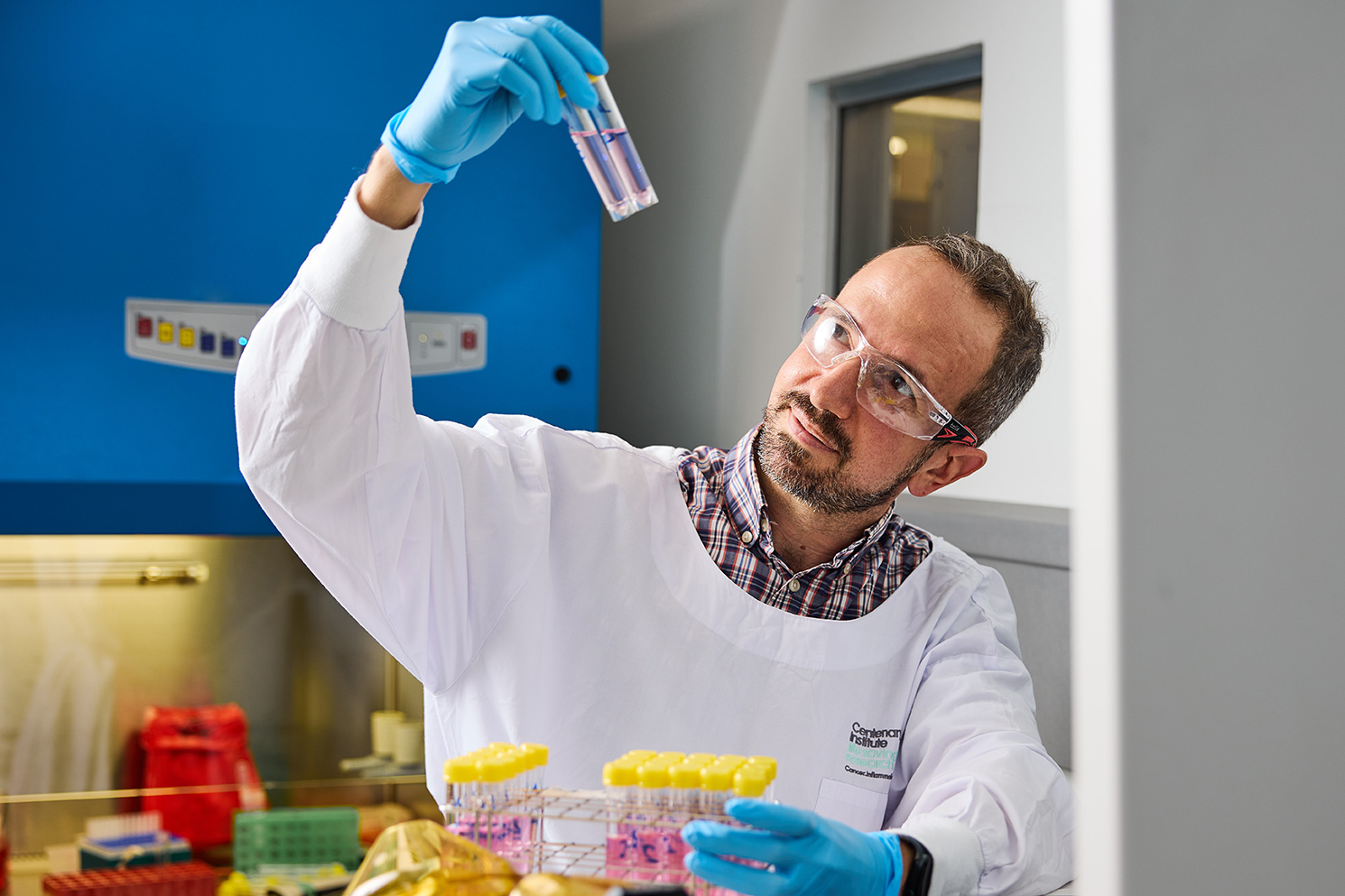
In the laboratory, Dr Tiffen will be testing different approaches to control histone methylation in melanoma. She hopes the research will lead to new drug treatments to stop melanoma growth or reverse the deadly treatment resistance.  

Professor Mathew Vadas AO, the Centenary Institute’s Executive Director, said the successful grant was a superb outcome for a vital project.

“The Centenary operates at the very forefront of this exciting aspect of melanoma research in Australia and I congratulate Dr Tiffen who has been awarded this important funding. I look forward to seeing the outcomes of this research which has the potential to help reduce the tragic loss of life associated with melanoma in this country.”

Further information on the Centenary Institute’s Melanoma Epigenetics Laboratory can be found here.
Themes

  • Cancer Innovations

    Cancer Innovations

Laboratories

  • Tiffen

People

  • Dr Jessamy Tiffen

    Acting Deputy Director
    Head, Centre for Cancer Innovations

Media enquires

For all media and interview enquiries, please contact Tony Crawshaw

Phone number Phone Number +61 402 770 403

Email Email t.crawshaw@centenary.org.au

Media Release

Download

Recent Stories

  • Blood test discovery could help identify head and neck cancer patients at higher risk of relapse

    Researchers at the Centenary Institute, Chris O’Brien Lifehouse, NSW Health Pathology and Royal Prince Alfred Hospital have found a potential new way to help doctors identify which head and neck cancer patients may be at higher risk of their cancer returning, using a simple blood test.
    News Type: Media release
    Date 25 Feb 2026
  • New FAP-Index could transform early detection of severe liver disease

    Researchers from the Centenary Institute have developed a new diagnostic tool, the FAP-Index, that could significantly improve how doctors identify people at risk of serious liver damage caused by metabolic fatty liver disease. The condition affects around one in three Australians with cases projected to increase by 25% to over 7 million by 2030.
    News Type: Media release
    Date 20 Feb 2026
  • First‑of‑its‑kind AI platform to improve cancer treatment decisions

    Centenary researchers have been awarded funding to commercialise a first‑of‑its‑kind medical AI platform designed to improve treatment decisions and reduce unnecessary surgeries for Australian cancer patients. The project, funded through the Australian Government’s Australia’s Economic Accelerator (AEA) Ignite program and led by Dr Yagiz Aksoy, Senior Clinical Research Fellow at Centenary’s Centre for Biomedical AI, ...
    News Type: Research News
    Date 19 Feb 2026
  • New initiative to allow researchers to decode disease like never before

    The Centenary Institute and the University of Sydney have launched a major new initiative that brings next-generation spatial biology technologies together to transform how health threats such as cancer, cardiovascular diseases and infectious diseases are studied and understood.
    News Type: Research News
    Date 11 Feb 2026

Subscribe to receive news on
research updates and free events

Newsletter

The Centenary Institute is a world-leading independent Medical Research Institute.

We acknowledge the Gadigal of the Eora Nation, the traditional custodians of the Country on which the Centenary Institute stands.

About

  • About us
  • Governance
  • Corporate information

Research

  • Our researchers
  • News

Careers & studies

  • Career opportunities
  • Student opportunities
  • Life at Centenary

Links

  • Contact
  • Privacy statement
  • Staff Intranet

Contact us

Building 93, Royal Prince Alfred Hospital
Missenden Rd
Camperdown NSW 2050 Australia
Telephone +61 2 9565 6100
Fax +61 2 9565 6101

Contact Privacy

Centenary Institute ABN 22 654 201 090 (DGR 1) • Centenary Institute Medical Research Foundation ABN 85 778 244 012 (DGR 2)
© 2017 Centenary Institute of Cancer Medicine and Cell Biology.

  • Linkedin
  • Facebook
  • Twitter
  • Youtube
  • Instagram